Antigua & Barbuda 7-Night Catamaran Itinerary: English Harbour to Pink Sand
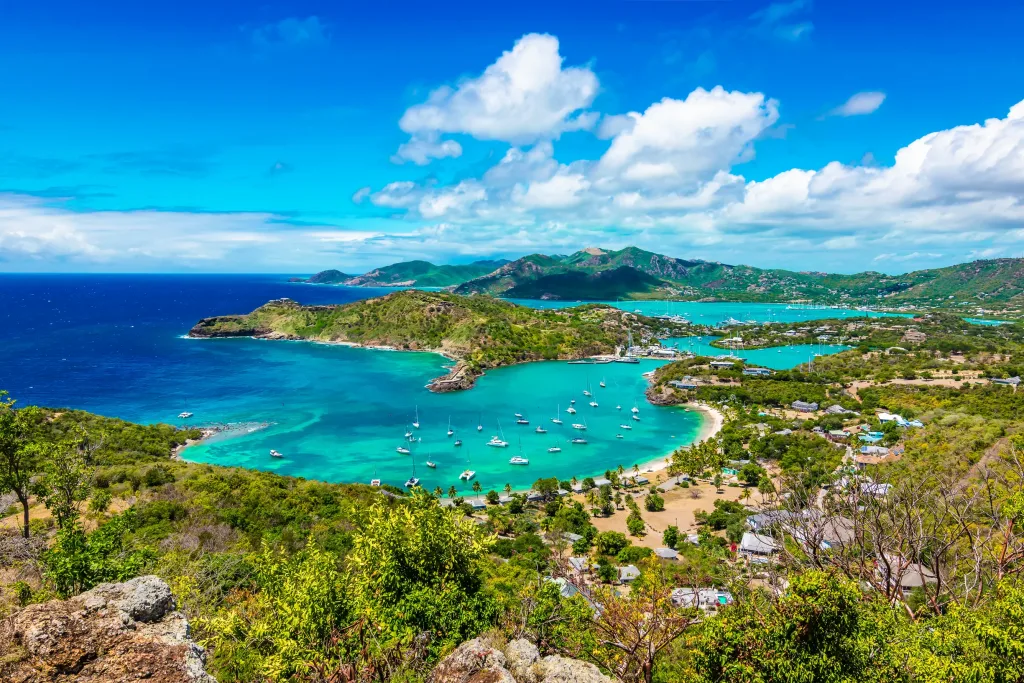
A week-long Antigua catamaran itinerary linking Nelson’s Dockyard, the island’s best bays and a two-night Barbuda detour to the pink-sand beach.
Read more
Updated May 2026.
A Caribbean charter day has its own rhythm — different from a Mediterranean week, different again from a hotel holiday. The trade winds set the schedule, the anchorage choice shapes the evening, and the day’s pace is dictated by the boat, not the calendar. This piece walks through a realistic Caribbean charter day on a 50-foot catamaran in the BVI in mid-March, hour by hour, with the kind of detail that makes it feel real. The location is the BVI but the rhythm is essentially identical across the Bahamas, the Leewards, Grenada, and Martinique.
The single best moment of any Caribbean charter day is the first light over the horizon. Sunrise in mid-March BVI is around 06:00. Whoever’s awake first puts the coffee on (most charter cats include a French press; some have proper espresso machines on premium boats). The cockpit at 06:00 is cool — the trade wind has dropped to under 10 knots through the night, the bay is glassy, and the first frigate birds are crossing high overhead. The Caves on the south end of Norman Island (the famous BVI snorkel site) sit empty before 09:00 — the day-tripper boats from Tortola arrive in waves starting around then. If you anchored in the bight last night, this is the hour to dinghy across, snorkel in solitude, and be back for breakfast on board.
Breakfast on a Caribbean charter cat is fresh fruit (mango, papaya, pineapple — bought at the BVI market on Tortola or at one of the floating provisioning boats that come alongside in popular anchorages), local bread (ordered from the morning bread boat that visits Norman Island, the Bight, and Soper’s Hole), eggs done however the cook of the day wants them, and serious coffee. The cockpit table seats 6-8 comfortably with the saloon hatches open. Conversation is unhurried; today’s question is whether to cross to Cooper Island or push directly to Virgin Gorda.
Anchor up around 09:00. The BVI’s typical north-shore mooring scheme uses Bonair or Marine Resources National Parks Trust mooring buoys — pickup is from the bow with a short boat hook. If you anchored on chain in the bight (a few of the deeper spots allow it), the chain comes up muddy. The boat reverses out of the bay, hoists the main with one reef in (standard for the typical 17-knot trade wind), and rolls out the genoa. The Sir Francis Drake Channel is dead downwind from Norman Island to Cooper Island — 9 NM, 75 minutes at 7 knots. The boat runs on autopilot; the crew rotates through the helm seat, the bow trampoline, the hammock on the foredeck.
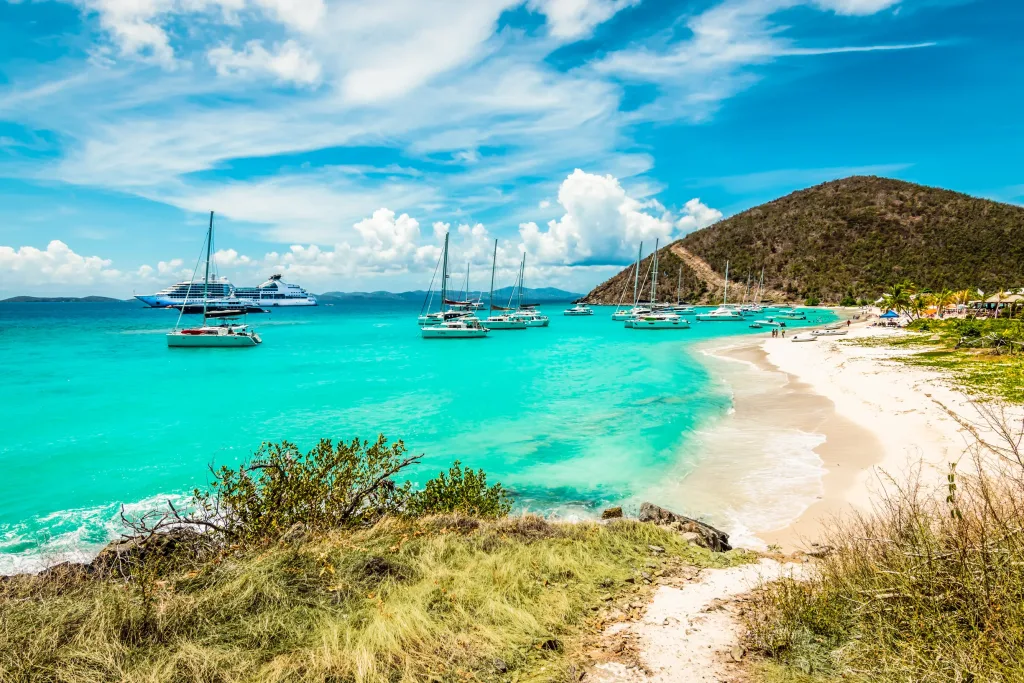
Cooper Island Beach Club’s Manchioneel Bay is the standard mid-morning swim stop. Pick up a mooring (paid, $40 in 2026), drop into the water for the first proper swim of the day. The reef on the south end of the bay holds rays, occasional turtles, and a small wreck for snorkelling. The Beach Club’s beach bar opens at 11:00 — fresh juice, light lunch, the famous Cooper Island Painkiller. If you’re lunching ashore, walk along the beach to the small dive shop for the afternoon dive trips. If you’re staying on the boat, lunch is sandwiches and salads in the cockpit.
The afternoon leg is to The Baths on Virgin Gorda — 6 NM north-northeast, partly windward of the Cooper Island anchorage. Two reefs out, full main, jib trimmed close — the boat heels gently (catamaran “heel” being a 3-4 degree thing, not a monohull’s 15-20). The Baths sit at the southwestern tip of Virgin Gorda — a unique granite-boulder beach with caves and pools. Pick up a mooring at Devil’s Bay (the more sheltered approach) or Spring Bay just to the north. Dinghy ashore. Walk the boulder-trail through the caves — sturdy shoes essential, swimsuit underneath, dry-bag for cameras. The walk is 90 minutes for the full trail; sunset light through the boulders at 17:30 is the marquee photo.
Back at the boat by 16:30. Most Caribbean charter cats include 2-3 paddleboards and snorkel sets for the full crew. The Devil’s Bay anchorage has good snorkelling along the south wall — parrotfish, blue tang, occasional eagle ray. Paddleboarding around the boulder coast is an afternoon highlight. The trade wind drops noticeably by 17:00 — the windiest part of the Caribbean day is typically 11:00-15:00.
The transition between active afternoon and pre-dinner. Sundowners on the catamaran’s flat foredeck — local rum and tonic, painkillers from the day’s mix, cold beer for the non-rum drinkers, a small plate of cheese and charcuterie or a Bahamian-style conch fritters from a local source. The conversation slows. Someone (always someone) photographs the sunset — the Caribbean March sunset over the Sir Francis Drake Channel is consistently one of the best photographs of the year. The bay is quiet by 18:00 — the day-trippers have left, the charter boats remaining have settled in.
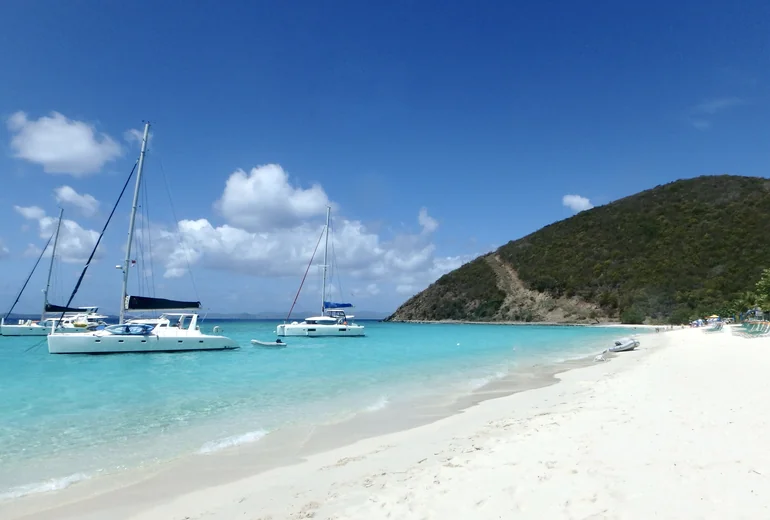
The dinner choice on a Caribbean charter is the small ceremony of the day. Two patterns dominate:
Beach-bar dinner ashore: dinghy to a famous Caribbean beach bar. Soggy Dollar Bar at Jost Van Dyke is the most-photographed BVI bar; Saba Rock at the North Sound on Virgin Gorda is the upmarket sit-down dinner; Foxy’s at Great Harbour, Jost Van Dyke is the live-music option; The Bath and Turtle at Spanish Town is the Virgin Gorda quick-bite. Tender to shore around 19:00, dinner from 19:30, back to the boat by 22:30. Caribbean beach-bar dinners run $40-80 per person on average.
Onboard dinner: fresh fish from the morning’s fish boat, grilled on the boat’s BBQ on the rail, with a salad and a cold bottle of local rum punch. Onboard dinners on Caribbean charters are genuinely better than most restaurants — the fish is fresher, the cooking is slower, the cockpit setting is unmatched. Most charter weeks split roughly 50/50 between ashore and onboard dinners.
The post-dinner Caribbean night is the part of the day no holiday brochure captures. The bay is silent — no ferry traffic after 22:00, no road noise from the islands, no aircraft except the occasional trans-Atlantic jet 35,000 feet overhead. The sky in the BVI in March is the darkest you can find within 100 NM of any major city — the Milky Way is visible over the channel; satellite tracks crossing east-west are easy to spot; meteor showers (typically the Lyrids in late April, the Geminids in mid-December) deliver shooting stars across the catamaran’s foredeck horizon. Some crews swim — the BVI’s bioluminescence in some bays produces a glow when you stir the water. Most crews stay on deck until 23:30, then turn in.
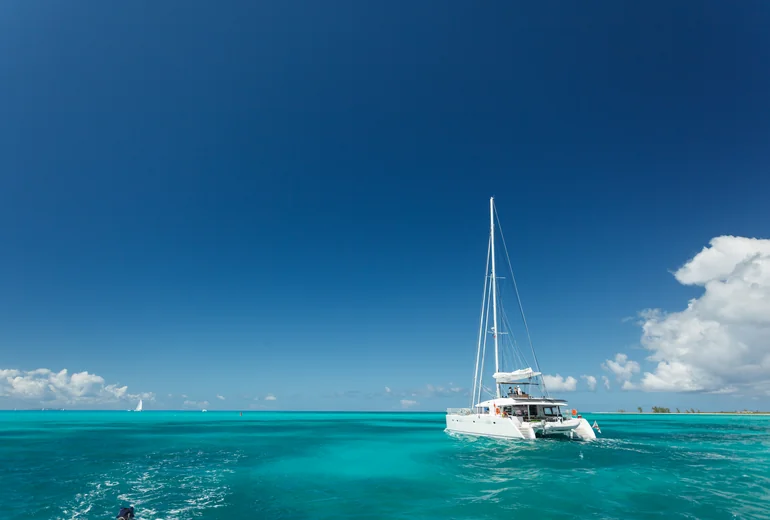
Sleeping on a Caribbean charter catamaran is the deepest sleep of most charterers’ year. The boat moves gently at anchor — the catamaran’s flat-deck stability means almost no motion compared to a monohull. The cabin is cooler than the daytime air — March BVI nights run 20-22°C, and most charter cabins have hatches that let in the breeze. Some crew sleep on deck on hot nights (rare in the December-April peak season) — a sheet on the foredeck, stars overhead. After two nights, the boat’s motion becomes invisible and the sleep becomes the best of the holiday.
The day described above is the standard rhythm at a settled BVI anchorage. Variations:
Anegada day: longer crossing (15 NM each way), more committed Day-3 logistics. The Setting Point reef approach requires careful chart-reading. The reward is the most-distinctive BVI anchorage — flat sand, lobster-shack dinner at Anegada Reef Hotel or Cow Wreck Beach Bar.
St Martin day: the international-border day. Marigot (French) for the marina morning, lunch on the French side, transit through the lagoon to the Dutch side for the afternoon. St Martin catamaran charter covers the local logistics.
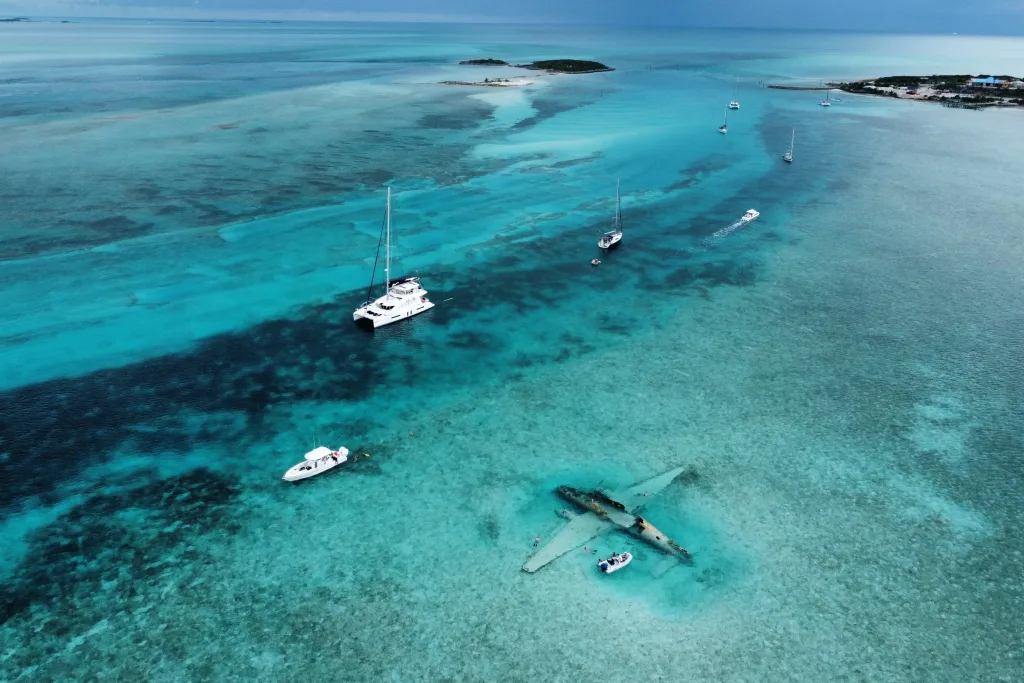
Bahamas Exumas day: longer downwind legs (15-25 NM between cays), pristine sand-bottom anchorages. The pig-beach at Big Major Cay is the marquee tourist stop. Catamaran charter Bahamas guide covers the Exumas chain.
Grenadines day: shorter inter-island legs, French-influenced cuisine in Bequia and Mustique. Quieter than the BVI. 7-day Grenada sailing itinerary covers the southern Caribbean version.
Things that surprise first-time Caribbean charterers:
— The wind drops at sunset. Mediterranean afternoons are often glassy; Caribbean afternoons are reliably windy. The trade-wind cycle peaks at 14:00-15:00 and drops sharply by 18:00. Plan sailing legs for the morning and early afternoon.
— The night is very quiet. Caribbean charter anchorages are mostly off-grid — no road noise, no aircraft below 10,000 feet, minimal commercial traffic. The silence is one of the most-cited charter highlights.
— Mid-week becomes routine fast. By Day 3 or 4, the boat feels like home. The galley, the sail rigging, the helm seat — all become familiar in a way no hotel can match.
— The exit transition is sharp. Going from boat-rhythm to airport-rhythm in 4 hours is jarring. Most crews talk about it being the hardest transition of the trip.
Yes, intentionally. Most repeat Caribbean charterers say the slow rhythm is the point. The day described above involves about 4 hours of active sailing, 3 hours of swimming/snorkelling/walking, and 4 hours of meals, drinks, and conversation. That’s the rhythm.
2-4 hours of in-water time on a typical day. More on lay days at marquee anchorages (Norman Island Caves, Anegada). Less on long-leg days. The water is reliably warm (26-27°C in season) and the snorkelling sites are abundant.
Both, on different nights. Soggy Dollar at Jost Van Dyke is the marquee BVI beach-bar experience and worth one night. The other 5-6 dinners split between onboard cooking and other beach-bar visits (Foxy’s, Saba Rock, Cooper Island Beach Club, the Anegada lobster-shacks).
Different for everyone. Most charterers cite the morning sunrise coffee or the late-afternoon swim. Some cite the night sky. The honest answer: there’s no single best moment — the day’s structure means many small good moments, not one big peak.
Wind reliability is the biggest difference. Caribbean afternoons are reliably windy; Mediterranean afternoons are often glassy. The Caribbean’s water clarity and snorkelling depth are noticeably better than Mediterranean equivalents. Restaurant culture is different — Caribbean beach bars vs Mediterranean village konobas — but the role of dinner ashore is similar.
Six short questions, then a real reply within four working hours.