Thanksgiving Catamaran Charter 2026: The Caribbean’s Best Last-Minute Window
Why late November is the quiet pre-peak window for a Caribbean catamaran, with fresh boats and pre-holiday rates while there’s still availability.
Read more

If you want a Christmas Caribbean catamaran charter for 2026/27, July is not early, it is the realistic last call for the good boats. The festive weeks are the most contested fortnight in the entire charter year, and by September the prime crewed fleet is largely committed. That is why this guide is going out now rather than in autumn: the urgency is real, not invented.
Below is the actual math behind the holiday premium, the contract quirks unique to these two weeks, and an honest month-by-month picture of what you can still book if you act this summer. None of it is meant to rush you into a bad decision. It is meant to stop you discovering in October that the search results are empty.
Holiday rates are not a random markup. Demand peaks while supply stays fixed, and operators price accordingly. Expect a Christmas or New Year week to run roughly 15 to 25 percent above the standard winter high-season rate, and the very best boats command more because they sell out first regardless.
On a 50-foot crewed catamaran that might list around 24,000 dollars for a normal peak week, a holiday premium of 20 percent adds roughly 4,800 dollars. That is before the extras that scale with any week: advance provisioning, fuel, base fees, and crew gratuity. The premium buys you the single best-weather, most-festive stretch of the year, but it is worth budgeting for openly. Our Caribbean catamaran charter cost breakdown shows how those line items add up so the holiday figure does not blindside you.
One quirk worth knowing: the New Year week often carries a slightly steeper premium than Christmas itself, because demand for a sunset sail on the 31st and a fireworks-lit anchorage is intense across the whole region. Bareboats follow the same curve at lower absolute numbers, so even a self-skippered holiday week sits above its normal peak rate. If your budget is firm, deciding between the two weeks early gives you a clearer target and a better shot at the boat that fits it.
Beyond price, the festive weeks come with booking rules you will not see in the shoulder season. Knowing them upfront saves a lot of frustration.
Most operators impose strict 7-night minimums over the holidays, and many lock the turnaround to specific days so the fleet cycles cleanly. The classic pattern is a Christmas week and a separate New Year week with a fixed changeover, often around the 26th or 27th. You usually cannot start mid-week or book a short break; you take the defined slot or you wait.
Holiday bookings frequently require a higher deposit and carry tighter cancellation terms, since the operator has little chance of reselling a prime week if you drop out late. Read the ladder carefully and confirm whether your deposit is transferable to another date. With weather risk low in December, the bigger variable here is your own flexibility, not storms.
On crewed boats, festive menus, special-occasion provisioning, and a strong chef are part of the appeal and part of the cost. The most sought-after crews book earliest of all, which is another reason the September cutoff is real. If a particular chef or boat matters to you, the window to secure them is now.
Here is the candid availability picture for the 2026/27 holidays as it typically unfolds. Treat it as a guide to urgency, not a guarantee, since individual fleets vary.
This is the practical sweet spot. A solid range of crewed and bareboat catamarans is still open, including good 45-to-55-foot boats, and you can still influence dates, layout, and crew. Booking now gives you genuine choice and the best shot at the boat you actually want for either holiday week.
The window narrows sharply. The premier crewed boats and most popular layouts are largely gone. You can still find availability, but you are increasingly choosing from what remains rather than the full range, and the very best chefs are typically booked. This is the month the door starts closing.
Slim pickings. Expect leftover bareboats, off-peak sizes, or the occasional cancellation slot. Last-minute holiday availability does surface, but counting on it is a gamble, and you will rarely get your first choice of boat or date. By this point, flexibility on everything is your only real leverage.
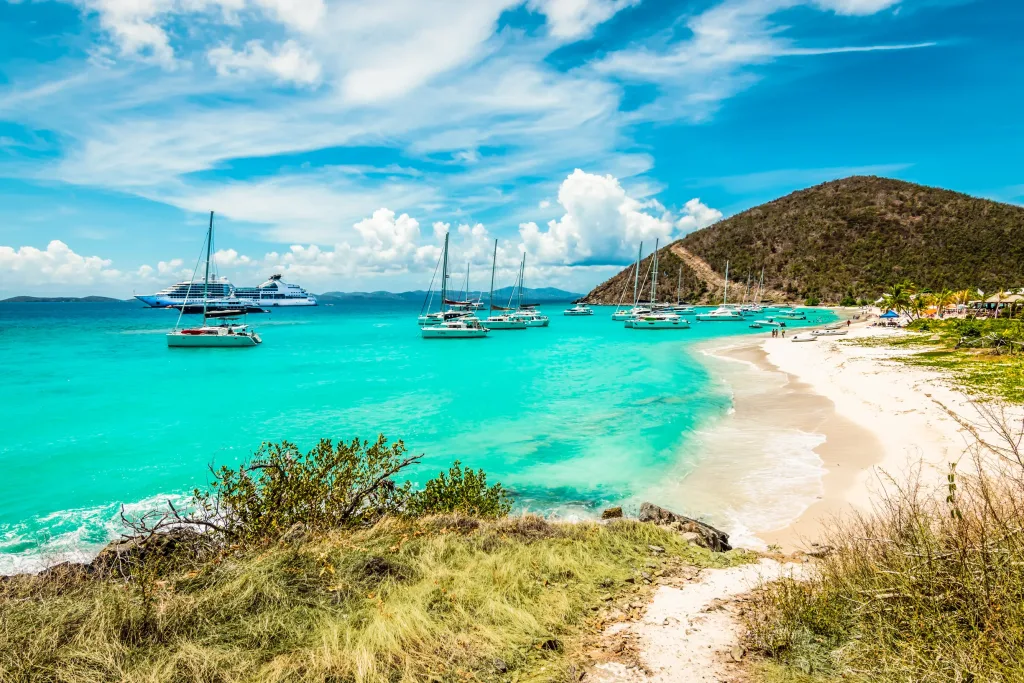
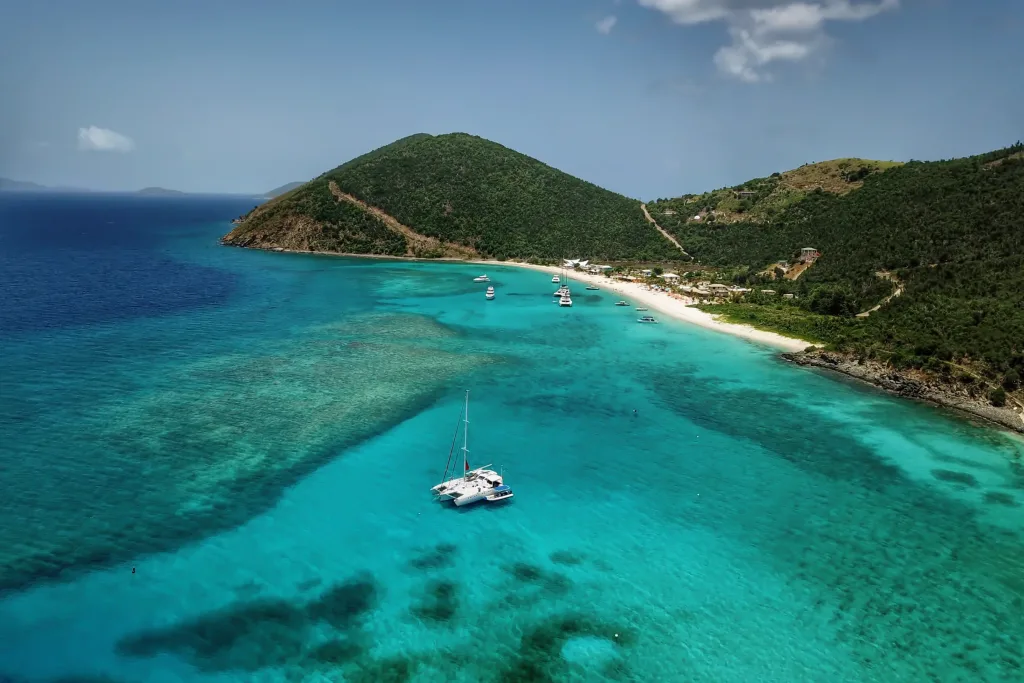
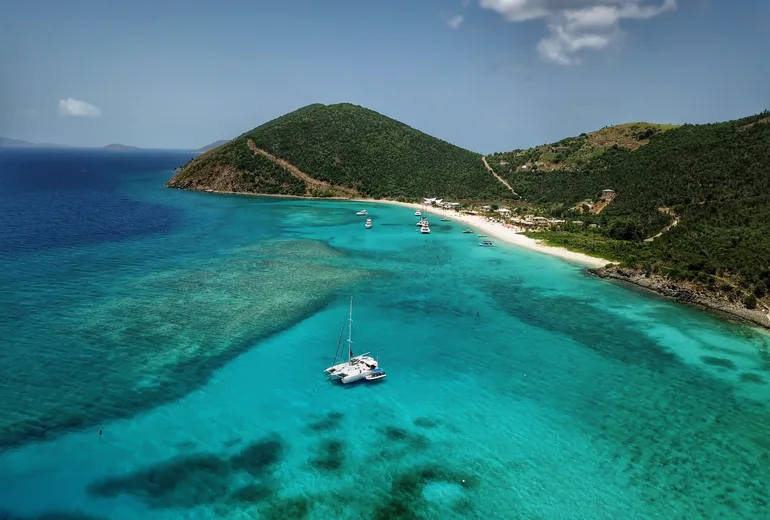
The festive season suits destinations with reliable December trades and plenty of protected anchorages for big-group sailing. The British Virgin Islands are the perennial holiday favourite for good reason: short hops, sheltered waters, and a lively scene at spots like the Bitter End and Foxy’s on Jost Van Dyke for New Year’s Eve. Demand there is correspondingly intense, so it is also where lead times bite hardest.
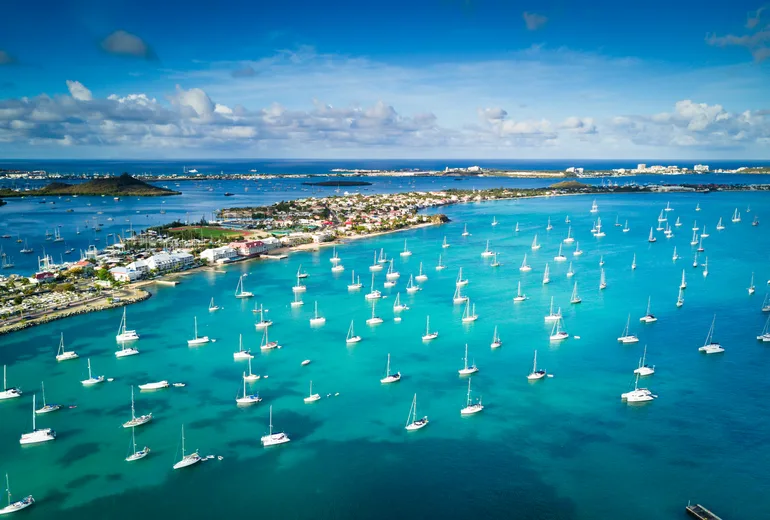
For something with strong holiday character and a slightly different rhythm, the twin-nation hub around Saint Martin pairs French and Dutch culture with easy access north to Anguilla and St. Barth. Our guide to chartering from Saint Martin as a northern-Caribbean base lays out the cruising radius and why it works well for a festive itinerary with a mix of beach time and dining.
Whichever base you choose, picture the days as well as the price. A typical holiday week threads a New Year’s Eve anchorage like Gorda Sound or Marigot with quieter Christmas-morning bays where the boat has the cove largely to itself. Crews often plan the big-night spot first, then build the rest of the route around it, since the popular New Year anchorages fill early and a late arrival can mean a long dinghy ride to the party ashore. Reserving a mooring or arriving by early afternoon on the 31st is the difference between a front-row seat and bobbing at the edge.
If you have decided to go for it, move efficiently. The groups that secure the best holiday boats tend to do the same few things.
The same logic that governs the holidays governs the whole peak season, just in concentrated form. If your dates have any flexibility, our look at how far in advance to book a Caribbean catamaran shows where the pressure eases and where it does not. For the holidays specifically, though, the answer is simple: the best move is the one you make this summer.
In July and August, yes, with genuine choice across crewed and bareboat boats. By September the premier crewed fleet is largely gone, and October to November leaves mostly leftovers and the odd cancellation. If the 2026/27 holidays matter to you, book this summer rather than waiting.
Plan on roughly 15 to 25 percent above the standard winter high-season rate, with the best boats commanding more because they sell out first. On a 50-foot crewed cat, that can mean several thousand dollars in premium before provisioning, fuel, base fees, and gratuity.
Operators run fixed 7-night holiday slots with set turnaround days so the fleet cycles cleanly between the Christmas and New Year weeks. It keeps logistics manageable during the busiest stretch of the year, which is why mid-week starts and short breaks generally are not offered.
Generally, yes. December sits in the dry season with steady trade winds and is well outside the hurricane window, so weather risk is low. The main variable over the holidays is availability and your own scheduling flexibility, not storms.
The British Virgin Islands are the classic choice for short hops, sheltered anchorages, and a lively New Year’s Eve scene, though demand and lead times peak there. Saint Martin makes a strong alternative, pairing French and Dutch culture with easy access to Anguilla and St. Barth.
Set on the festive weeks? Compare the bases and weather windows in our Caribbean season and timing guide, then enquire on your shortlist before the September squeeze.
Six short questions, then a real reply within four working hours.