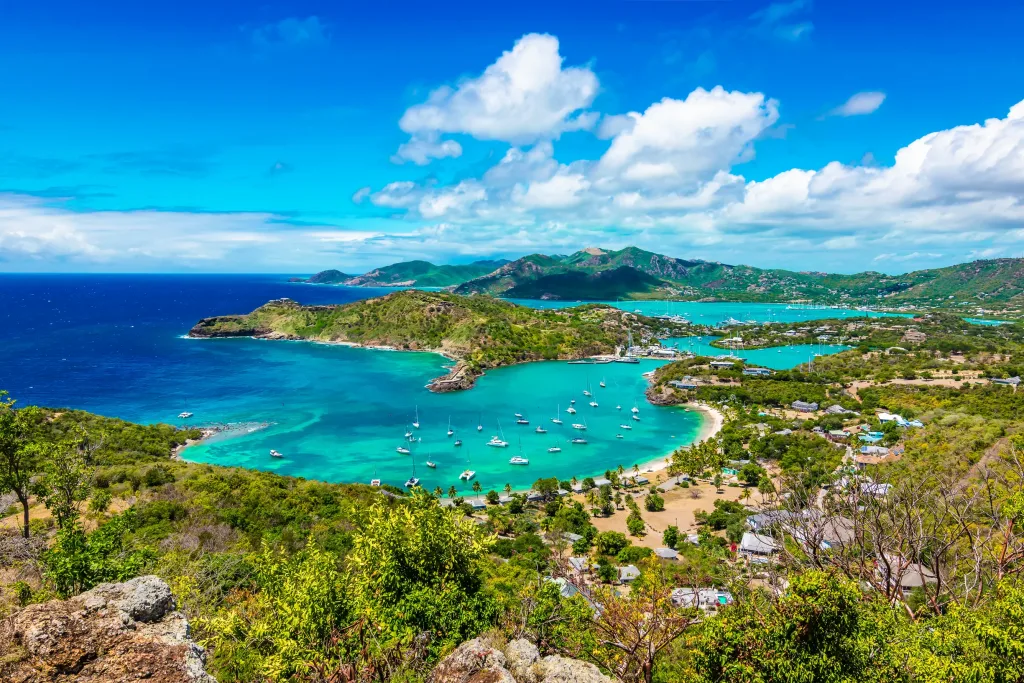
Antigua & Barbuda 7-Night Catamaran Itinerary: English Harbour to Pink Sand
A week-long Antigua catamaran itinerary linking Nelson’s Dockyard, the island’s best bays and a two-night Barbuda detour to the pink-sand beach.
Read more
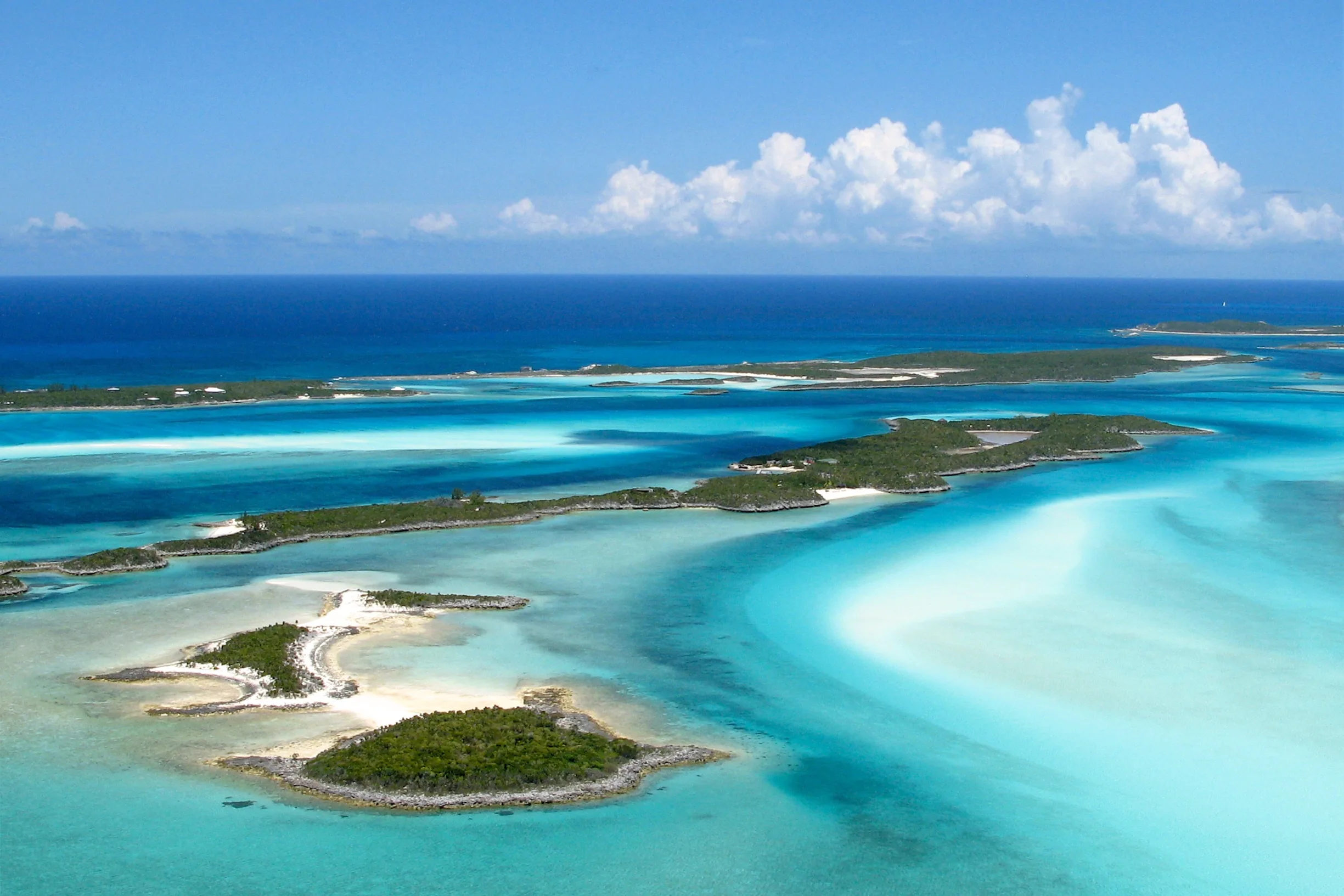
The Exumas are a 120-mile chain of cays strung across some of the clearest water in the Bahamas, and they reward a catamaran more than almost any cruising ground on earth. The banks are shallow, the anchorages are sandy, and the famous stops — pigs, grotto, sharks — sit in water a deep-keeled boat treats with caution and a cat shrugs off.
This Exumas catamaran itinerary runs seven days from Nassau or Palm Cay down the chain and back, built around the tides that actually govern the trip. It is a route for crews who want the postcard hits without the rookie mistakes that ruin a swimming-pig morning or a Thunderball snorkel.
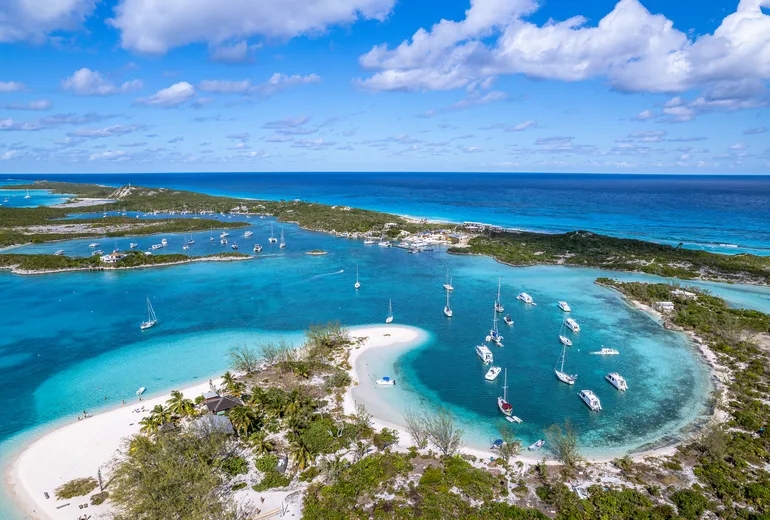
Most charters start at Palm Cay Marina on New Providence rather than fighting Nassau harbour traffic. After the boat briefing, point southeast across the Yellow Bank — watch for the dark coral heads, easy to dodge in good light — and run the roughly 35 NM to Highbourne Cay, the gateway to the Exuma chain. It is a four-to-five-hour reach in the typical easterly trades.
Highbourne has a tidy marina, a small store and reef sharks that gather at the fish-cleaning dock most afternoons — a tame first taste of what is coming. Anchor or take a slip, and if you are timing the whole week, this is where you start watching the tide tables, because everything good downstream is tide-dependent.
A note on the start: the Bahamas runs a 14% charter tax on the boat, which is steeper than anything in the BVI and worth knowing before you compare quotes. Provisioning is also a Nassau job — once you leave New Providence, the stores shrink to village size and prices climb, so load the boat properly on day one. If you are still deciding whether the Exumas justify the premium, our before-you-book overview on the best time to charter a catamaran in the Caribbean covers how the Bahamas season lines up against the rest of the region.
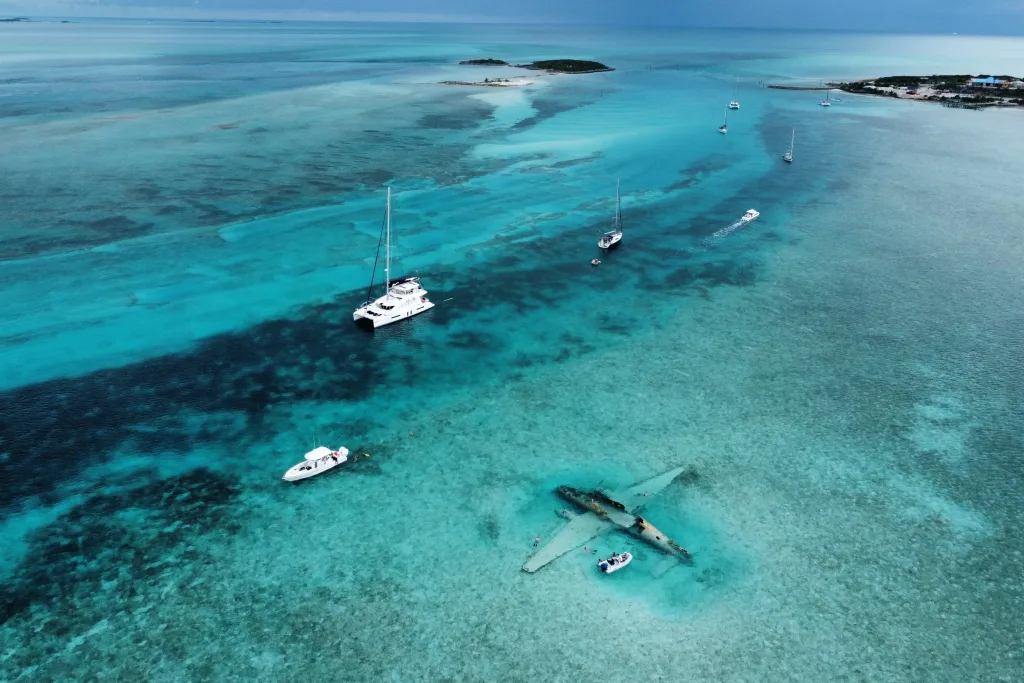
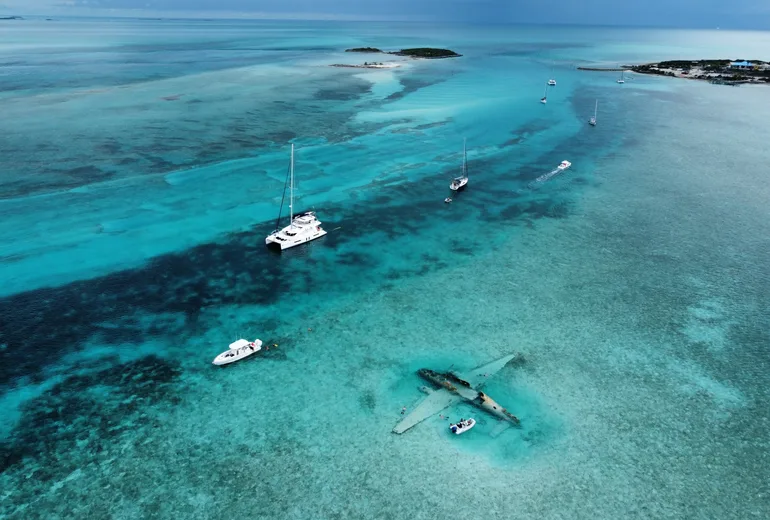
A short hop south brings you to Allan’s Cay, home to the Exuma rock iguanas. They wander the beach looking for handouts; admire them, do not feed them processed snacks, and keep fingers clear of the grapes vendors will try to sell you for the purpose. From there it is a few miles to Norman’s Cay, where a sunken drug-smuggling plane lies in shallow water just off the anchorage — an easy, eerie snorkel right from the dinghy.
Here is the rule that makes or breaks an Exumas week: the cuts between cays run hard on the tide, and the best snorkelling happens at slack water. Get into the habit of checking high and low at Nassau and adding the local offset. A catamaran’s shallow draft means you can hold sandy anchorages others cannot — but a foul current in a cut will still ruin a swim, so you plan around the clock, not the other way round.
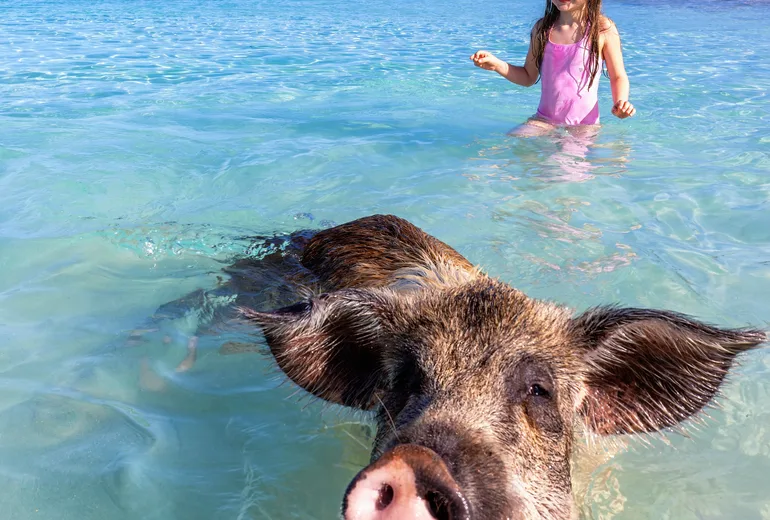
The swimming pigs of Big Major Cay are the trip’s headline, and they deserve a little etiquette. Arrive early before the day-tripper boats roar in from Staniel Cay, drop the hook in the sand off the beach, and let the pigs come to you in the shallows. Feed only what the rangers allow — no bread, no plastic — and never get between a sow and her piglets. Done right, it is the morning everyone photographs; done wrong, it is a churned-up scrum.
Big Major sits a short dinghy ride from Staniel Cay, your hub for the next two stops. The Staniel Cay Yacht Club is the social anchor of the central Exumas — cold drinks, fuel, a small grocery and nurse sharks idling under the dock. The anchorage off Big Major can get busy at peak times, so if you want the beach to yourselves, the early window before about 9am is the one to aim for. Sundowners back on the cat, with the pigs settling on the sand and the day boats long gone, is the version of this stop most crews remember best.
Just off Staniel sits Thunderball Grotto, the cathedral-like sea cave used in the James Bond film. Snorkel it at slack low water — at full current you will be swept past the entrance, and that is when people get into trouble. Slip in through the low opening at the right tide and you surface inside a sunlit chamber loud with fish. It is one of the best snorkels in the Bahamas and entirely free.
Spend the afternoon at Staniel: top up provisions, refuel, and watch the nurse sharks at the yacht club. If you are weighing the Bahamas against other grounds, our cost-focused look at BVI versus Bahamas versus Grenadines per person per day explains why the Exumas carry a 14% charter tax that the others do not.
A few miles north, Compass Cay Marina is famous for the nurse sharks that crowd its dock, used to being hand-fed and happy to be stroked along the back. There is a small fee to land and walk the cay, and a trail to a high dune with a long view down the banks. Anchor outside in the sand or take a slip; either way this is a relaxed, swim-heavy day after the busier central cays.
The sharks here are harmless filter-feeders rather than predators, but they are still large wild animals, and the staff will brief you on how to behave around them. Beyond the dock, Compass Cay is one of the prettier walks in the chain, with a powder beach on the ocean side and the banks shimmering on the other. It is a good place to spend a slow afternoon, do some laundry of swimsuits and towels on the boat, and let the pace drop before the run home.
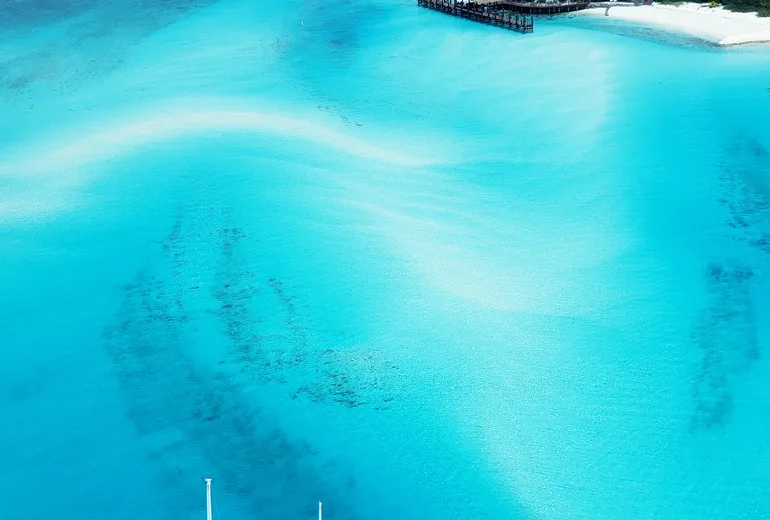
Black Point Settlement on Great Guana Cay is the real-Bahamas counterpoint to the resort cays — a proper village with Lorraine’s Café, the famous laundromat-with-a-view, and conch fritters made to order. It is a good place to slow down, talk to people who live here year-round, and reset before the trip home. From here you begin working back up the chain toward Highbourne to shorten the final day.
If you have the energy, the dinghy ride to Dotham Cut and the blue holes nearby is worth it, and the bakery in the village sells out of fresh bread early. Black Point is also one of the better spots in the chain to refill water and dispose of garbage, so it doubles as a practical pit stop. Spend the afternoon swimming off the boat, then a last village dinner ashore before the early start north — the contrast between the polished resort cays and this working settlement is, for many crews, the most memorable part of the week.
Reverse the Yellow Bank crossing back to New Providence, timing your departure so you arrive at Palm Cay with daylight and a buffer for the boat hand-back. A 35 NM reach in steady trades is a fitting last sail, and if the wind cooperates you will close the loop downwind with the whole chain astern. Leave early — the crossing wants good light to dodge the coral heads, and you do not want to be threading the Yellow Bank with the sun in your eyes at the end of a long week.
For the full picture of pilotage, provisioning gaps and where the deep-water marinas are, read our complete Bahamas catamaran sailor’s guide to the Exumas and Abacos. It covers the banks-versus-Sound routing and the realities of provisioning a chain with very few supermarkets.
The itinerary above assumes settled trades, which is the norm in the December-to-April window. When a winter front sweeps through, the wind can clock from east to north and west over a day, and the eastern-facing anchorages that were calm become untenable. The fix is to think of the chain as offering shelter on both sides: when it blows north, tuck behind the cays on their southern flank; when it settles back into the east, the classic anchorages reopen. A shallow-draft catamaran gives you far more of these bolt-holes than a deep monohull, which is exactly why the boat and the ground suit each other.
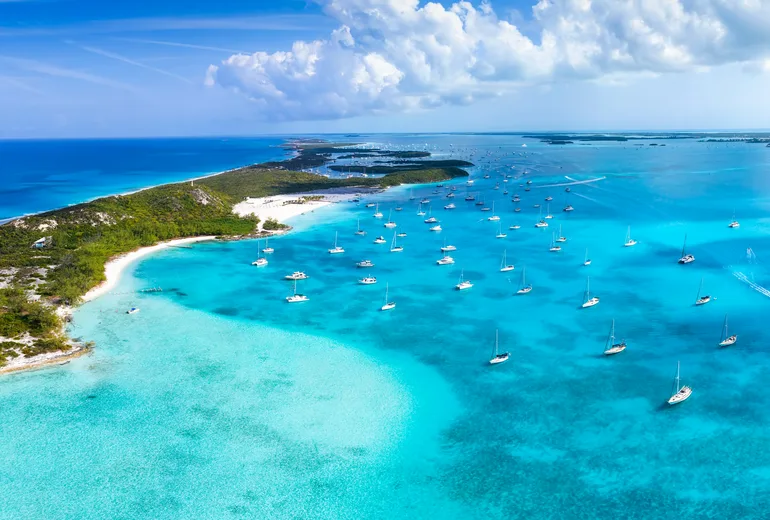
Almost every great Exumas anchorage is shallow sand, and that is exactly where a cat thrives — under 1.5 metres of draft lets you tuck in close, swing on the hook in thin water and beach the dinghy anywhere. The wide deck and shade make the long, hot lunch stops genuinely comfortable, and the stability across the open banks keeps queasy crew happy. For the central-Exumas pig-and-grotto run especially, no other boat is as well matched to the ground.
There is a practical edge too. The Exumas have very few all-weather harbours, so when a front swings the wind around you often need to move anchorages to stay sheltered — and a cat’s shoal draft means more of the chain stays open to you when that happens. Add air conditioning powered by a generator for the hot, still nights, and the catamaran turns a navigationally demanding ground into a comfortable family holiday. It is the boat the Exumas were practically designed for.
Most begin at Palm Cay Marina on New Providence near Nassau, which avoids the busy main harbour and puts you a single reach from Highbourne Cay and the top of the chain. A few operators base out of George Town at the southern end for a reverse route.
Yes — the cuts between cays run hard on the tide, and key snorkels like Thunderball Grotto are only safe and easy at slack water. Check high and low at Nassau, add the local offset, and plan your swim stops around the clock rather than your schedule.
Generally yes, with common sense. Arrive early before the tour boats, let the pigs come to you in the shallows, feed only what rangers permit, and never get between a sow and her piglets. Treat them as large wild animals that happen to like the water.
Seven nights covers the headline central cays — pigs, Thunderball, Compass Cay — with a comfortable run down and back. Ten days lets you push further south toward George Town or add the Land and Sea Park without rushing the daily tide windows.
Plotting a Bahamas week of your own? Explore our Caribbean and Bahamas catamaran destinations and build a route that runs on the tides, not against them.
Six short questions, then a real reply within four working hours.