Antigua & Barbuda 7-Night Catamaran Itinerary: English Harbour to Pink Sand
A week-long Antigua catamaran itinerary linking Nelson’s Dockyard, the island’s best bays and a two-night Barbuda detour to the pink-sand beach.
Read more
The bareboat-vs-crewed decision determines what your week feels like more than which boat you charter. Bareboat is the autonomy week — you set the itinerary, you cook the meals, you handle the lines, you decide when to leave a bay. Crewed is the hosted week — a professional captain runs the navigation, a hostess or chef runs the meals, and you’re effectively a guest on someone else’s beautiful workplace. Both are excellent. They’re just different products. This guide breaks down the actual decision factors so you can match the right format to your group.
Bareboat charter requires a recognised sailing certificate. Recognised in the Caribbean: RYA Day Skipper, RYA Yachtmaster, US Sailing Bareboat Cruising, ASA 104, IYT Bareboat Skipper, ICC, French permis hauturier. A logbook showing at least three multi-day passages on a similar size catamaran is also required by most charter companies. If you don’t hold one of these, your only options are crewed charter or skipper-only (a captain comes with the boat at USD 250 to 320 per day).
Many charterers without bareboat certification book a captain to come with their otherwise-bareboat charter. This is the lowest-cost crewed option: you get the boat, you provision yourself, you handle meals, but a professional skipper runs the boat. Cost: typical bareboat rate plus USD 1,800 to 2,250 for the captain over a 7-day week.
Bareboat means complete control. You decide what time to leave Norman Island. You decide which dinghy to launch. You decide whether to pick up a mooring ball or anchor in 8 m. You decide whether to motor through a thunder squall or wait it out at anchor. For sailors who want to sail their week, bareboat is genuinely worth the licensing investment.
Crewed means trade-off: you get someone else’s expertise (which can be transformational on a route you don’t know) but you give up some daily decisions. The captain may strongly recommend leaving by 09:00 to make a destination, may steer to one anchorage versus another, may decline a route you suggest. Most professional captains are flexible and accommodating, but the fundamental dynamic is hosted-guest, not driver.
Bareboat usually means self-provisioning and cooking 5 to 6 of 7 dinners on board. The galley on a Lagoon 50 or Bali 4.6 is well-equipped (gas range, oven, full fridge), but cooking for six guests in a moving boat is real work. Most bareboat charters do simple meals — grilled fish, salads, pasta — and rotate cooks among the guest group.
Crewed with a chef means: someone else does grocery shopping, someone else cooks, someone else cleans up. You eat what they prepare (usually with strong dietary input from you in pre-charter conversations) and the meal quality is genuinely restaurant-level — most charter chefs come from European fine-dining backgrounds and the menus reflect that.
Hostess (sometimes called “stewardess”) is the household-management role on board: cabin housekeeping, dishwashing, laundry, drinks service, on-shore reservation handling. Crew packages typically include hostess if they include chef. Hostess-only configurations (no chef) cost USD 150 to 220 per day.
For a 50-foot catamaran in BVI peak season:
Crewed packages also typically include all provisioning at USD 75 to 110 per person per day, which substitutes for the USD 35 to 50 you’d spend bareboat self-catering plus restaurant dinners. Net cost difference between bareboat and fully-crewed for an 8-person group: USD 6,000 to 9,000 across the week, or USD 750 to 1,125 per person.
A couple charter on a 4-cabin catamaran has plenty of space and minimal cooking demand. Bareboat or captain-only is the obvious choice. Cost-effective, autonomous, with the boat’s full capacity at your disposal.
A two-couple group can rotate cooking duties without anyone bearing a disproportionate burden. Bareboat works well. If both couples want to fully relax, captain-only or full crew adds cost but eliminates galley work.
Six-to-eight people including teenagers or young children: full crew is genuinely worth the premium. Parents who don’t want to spend the week shopping, cooking, and washing dishes get the actual vacation. Kids get supervised on-board (in a way 14-year-olds in particular benefit from). Chef can match meals to children’s preferences.
For groups of eight, the on-board cooking burden becomes serious without a chef. Full crew lets the entire group focus on the experience rather than rotation logistics. Most luxury charter weeks (Lagoon 55, Sunreef 50, custom yachts) are crewed-only for this reason.
Maximum autonomy and flexibility. Lower cost. The sailing experience itself — managing the boat is half the appeal for sailing-oriented guests. Privacy: no third party in your space.
Bareboat tradeoffs: someone has to do the work (cooking, cleaning, navigation, provisioning runs). Cooking and cleaning load can take 2 to 3 hours of every day. If anyone in the group is not enthusiastic about that, the week’s tone shifts.
Genuine vacation. Professional-level meals. Local knowledge — most BVI captains have run the Tortola loop hundreds of times and know things like “Anegada Reef Hotel runs out of lobster by 18:00 in peak season; book by 16:00 via VHF” or “the Wells Bay anchorage at Saba is a daytime mooring only — there’s no holding overnight.”
Crewed tradeoffs: cost. Some loss of privacy (crew is on board with you). Less autonomy in daily decisions. Some guests find the host-guest dynamic limiting.
Some operators offer a chef-only configuration: bareboat boat handling (you sail, you handle anchors and moorings), but a chef joins for meals. Less common in the Caribbean than the Mediterranean. Cost: bareboat plus USD 350 to 480 per day for chef plus provisioning at chef rates.
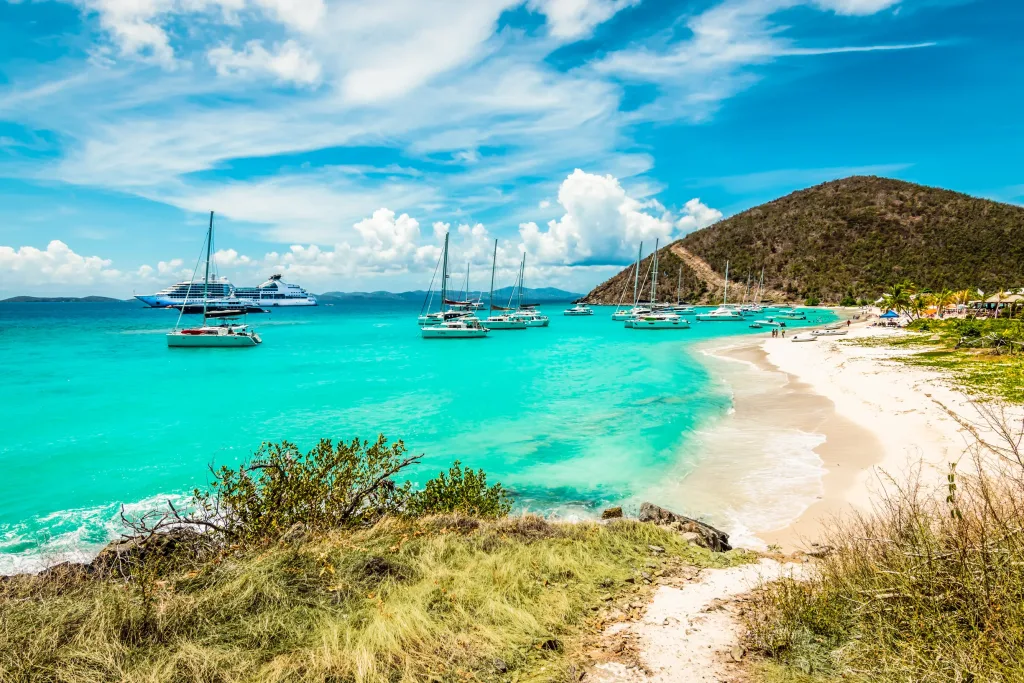
The BVI is the most bareboat-friendly Caribbean ground. Short legs, dense mooring infrastructure, simple navigation in protected channel water. Most BVI charters are bareboat or captain-only. Read more in our complete BVI catamaran charter guide.
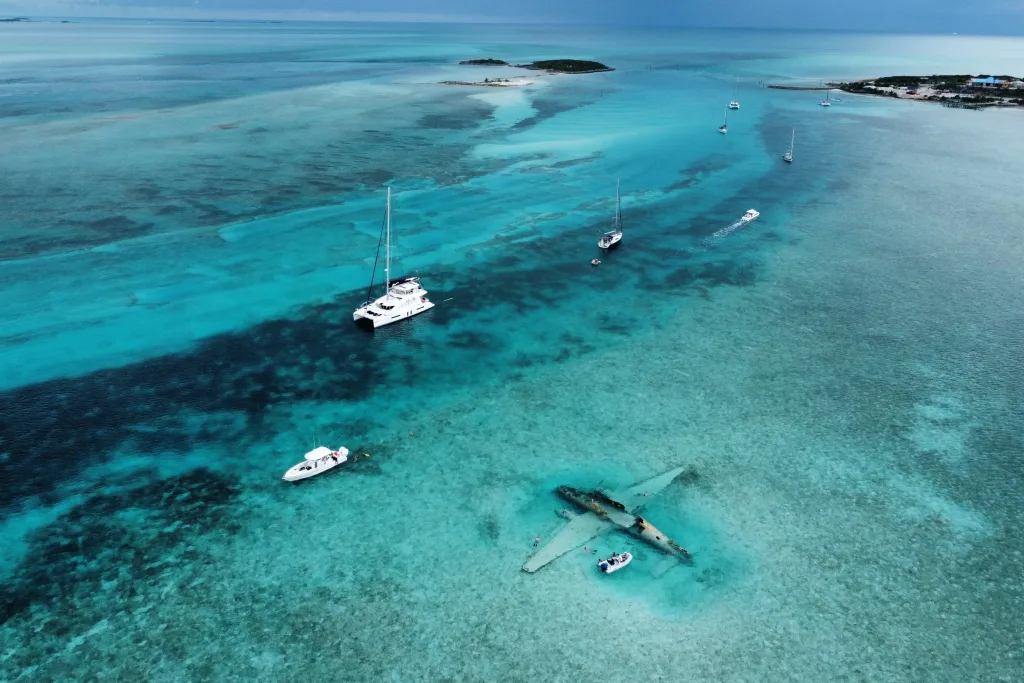
The Bahamas leans more toward crewed because the long-distance reaches (35 to 65 nm legs across the banks) and the customs and provisioning logistics favour someone who knows the route. Bahamas catamaran charter guide.
Grenada and the Grenadines lean crewed because of the multiple customs clearances and the long legs. Grenada catamaran charter guide.
St. Martin is mixed — Simpson Bay’s experienced fleet supports bareboat well, but radial trips to Anguilla, St. Barts, Saba and back work easily either way. St. Martin catamaran charter guide.
Bareboat: book the boat 4 to 6 months ahead in shoulder season, 6 to 9 months ahead for peak. Specific cabin layouts (4-cabin owner-suite-forward) sell out first.
Crewed: book 6 to 9 months ahead even in shoulder. Captain availability is the constraint — top captains are repeat-booked by clients each year. Specific captains (the BVI veterans, the Bahamas pig-beach experts) book a year out.
Browse our Caribbean catamaran fleet with cabin layouts and base pricing. Request a personalised quote with your preferred format and we’ll match boats and crew to your group.
Yes. Most operators will require a captain orientation half-day at handover (USD 200 to 280) where the captain takes you out, shows you local navigation hazards, and confirms you can handle the boat. Some operators also offer captain-for-the-first-24-hours arrangements where the captain handles the first overnight then leaves you for the rest of the week.
Runs navigation, anchor and mooring handling, weather assessment, communication with marinas. Does not cook, clean, or run shore reservations. You provision and meal-plan. Captain typically eats with the guest group at all meals (charter custom; budget USD 30 to 40 per day for captain food allowance).
Generally no — crew availability is week-by-week and you can’t add a captain mid-charter. The exception: if you find the week harder than expected, most operators can dispatch a captain to a marina to join you for the remaining days at full daily rate. Plan ahead — confirm fallback procedures at booking.
Standard custom: 10 to 20% of the boat charter rate, distributed by the captain. The captain typically gets the largest share, then chef, then hostess. For groups paying USD 18,000 for the boat, expect to leave USD 2,000 to 3,000 in tips (cash USD or major credit card via the operator).
Honestly, depends on the couple. Bareboat: complete privacy, total control, but cooking and cleaning workload. Crewed: someone else cooks the lobster dinner you’re eating, but the chef and captain are on board (separate cabins, generally invisible at meals). Many couples book bareboat for the first night anchored alone, then add captain for the longer-distance days.
This guide was prepared by the Catamaran Charter Caribbean editorial team — charter brokers who have helped clients choose between bareboat, captain-only, and full crew configurations across thousands of weeks since 2013. Last reviewed: May 2026.
If you have a specific group configuration question, write us at www.catamaran-charter-caribbean.com/contact.
Six short questions, then a real reply within four working hours.