Antigua & Barbuda 7-Night Catamaran Itinerary: English Harbour to Pink Sand
A week-long Antigua catamaran itinerary linking Nelson’s Dockyard, the island’s best bays and a two-night Barbuda detour to the pink-sand beach.
Read more
Updated May 2026.
The Caribbean charter season is the most clearly-bounded charter window in the world. Trade-wind sailing runs from mid-December through late April. Hurricane season closes most operators from July through October. May and June bracket the peak season as shoulder weeks with the cheapest pricing of the year. This guide covers what to expect for the 2026 Caribbean season — the weather windows, the regatta calendar, the industry trends shaping the fleet, and the pricing direction year-on-year.
The Caribbean charter calendar splits into four phases:
December (Christmas/New Year): peak premium pricing. Trade winds typically settling in by mid-month after the November Atlantic-front transition. Christmas week is the single most-expensive Caribbean charter week of the year — rates run 60-80% above shoulder-season equivalents, with the largest catamarans booked 12+ months in advance.
January-mid-April: peak season proper. Trade winds at their most reliable (15-22 knots from the east-northeast, 80% of days). Sea temperatures 26-27°C. Weather predictability is at its annual best. Charter rates run at standard peak pricing; specific weeks tied to US presidents’-day (mid-Feb) and easter (mobile, March-April) carry premium.
Late April-June: shoulder. Trade winds soften slightly, occasional spring squalls. Sea remains warm. Charter rates drop 25-40% from peak. May is consistently the best-value Caribbean charter month — full peak conditions with shoulder pricing and visibly empty anchorages.
July-October (hurricane season): most operators close. Boats are often delivered to summer Mediterranean charter, hauled for refit, or moved to specific hurricane-safe harbours. Some Bahamas-based operators run year-round with strict cancellation policies during named storms. Late November sees the first re-openings.
The Caribbean regatta calendar clusters in March and April. The marquee events for charterers (because they affect mooring availability and create distinctive atmosphere):
Heineken Regatta, St Maarten — typically held early March. Three-day racing event in Simpson Bay. Marina pricing in Marigot and Philipsburg surges for the regatta week; charter boats not in the regatta are advised to anchor outside the bay or move to Anguilla for the week.
BVI Spring Regatta & Sailing Festival, Tortola — typically held late March or early April. Nanny Cay-based regatta with charter divisions. The regatta’s accompanying Sailing Festival draws thousands of sailors to Tortola for the week. Charter boats book up fast.
St Barths Bucket Regatta — typically held late March. Premium superyacht regatta in St Barthélemy. The harbour is at full saturation; charter boats nearby (St Martin, Anguilla, St Kitts) report increased traffic.
Les Voiles de St Barth Richard Mille — typically held in April. Multi-day regatta following the Bucket. Same effect — premium yacht traffic, increased mooring pressure.
Antigua Sailing Week — typically held late April. The capstone of the Caribbean racing season. English Harbour and Falmouth Harbour saturate for the week; charter boats wishing to view the racing should anchor in Falmouth Harbour or Carlisle Bay (St James) and tender in.
Specific 2026 dates shift slightly year-on-year — confirm via each event’s official website 6-8 weeks before booking your charter.
Hybrid catamarans: 2025 saw the first commercial hybrid-electric Lagoon and Bali charter cats arrive in the Caribbean. 2026 will see a wider rollout. Charter premiums for hybrid models run 15-25% over conventional diesel cats. The advantage is silent operation at anchor and reduced fuel costs; the trade-off is reduced range and a 15-25% rate premium.
Electric tenders: nearly universal on premium charter cats now. Torqeedo and ePropulsion lead the market. The shift reduces dinghy fuel runs to zero and produces silent shore tendering — a meaningful upgrade at quiet anchorages.
Solar and battery upgrades: 800-1,200 W solar arrays and 600-800 Ah lithium house banks are now standard on new builds. Air-con run-time at anchor extends from 2-4 hours (older boats) to 8-12 hours (new builds), reducing generator dependency.
Sustainability features: charter operators are highlighting biodegradable cleaning products, reusable kit, and environmental-stewardship initiatives. Effect on bookings is real but modest — Caribbean charter customers remain more price- and weather-sensitive than green-marketing-sensitive.
Year-on-year benchmarks for the Caribbean charter market:
— Catamaran rates: up 6-10% year-on-year. Demand outpacing supply; new-build deliveries don’t fully fill the gap. Premium 50+ foot cats (Lagoon 51, Bali 5.4, Fountaine Pajot 51) up 8-12%.
— Standard monohull rates: up 2-3% year-on-year. The Caribbean monohull fleet has slack capacity.
— Crewed yacht rates: up 5-8%, with crew costs (skipper, chef) up faster than vessel costs.
— Marina overnight rates: up 10-15% in premium harbours (Soper’s Hole, Marigot Bay, Marsh Harbour). Rates outside the marquee harbours running flat.
— Provisioning: up 4-7%, reflecting general Caribbean food inflation. Specific items (fresh produce, premium wines) up faster than the average.
The full Caribbean cost picture is in our Caribbean catamaran charter cost breakdown.
BVI (Tortola base): the most-chartered Caribbean cruising ground. Distances are short, anchorages are sheltered, the fleet is enormous. The standard 7-day BVI loop is described in 7-day BVI catamaran itinerary. The country guide is BVI catamaran charter ultimate guide.
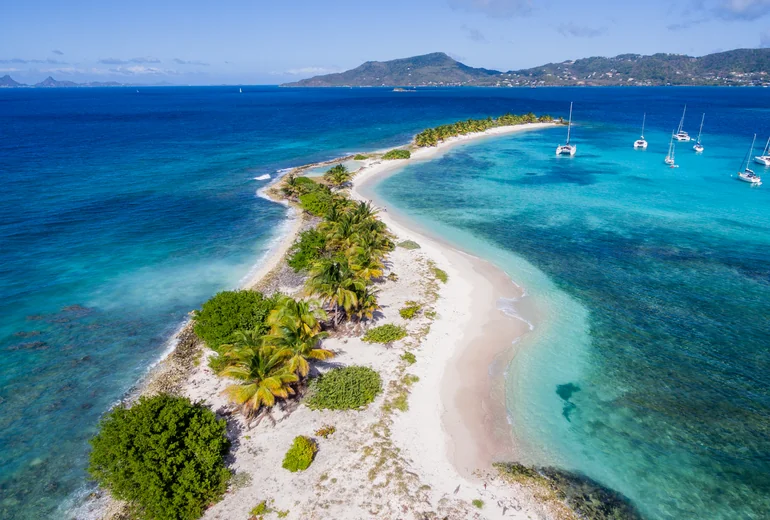
St Martin / St Maarten: the twin-nation charter hub. Marigot (French) and Simpson Bay Lagoon (Dutch) anchor the fleet. St Martin catamaran charter covers the base.
Bahamas (Marsh Harbour, Nassau, George Town): longer crossings, sandy anchorages, the Exumas chain. Catamaran charter Bahamas guide walks the route.
Grenada and the Grenadines: emerging charter destination, less crowded than the BVI. Grenada catamaran charter covers Spice Island and the southern islands.
Martinique: French Caribbean base, Le Marin marina. Quieter, more cultural, less crowded. Martinique catamaran charter guide.
Translating the season patterns into action:
— Christmas/New Year week: book by July 2025 for December 2025-January 2026. Premium catamarans sell out 12+ months ahead. Lagoon 51 owner-version inventory specifically books earliest.
— February-March peak weeks: book by October 2025 for the following peak. Standard 45-foot cats book through January.
— Easter / spring break: book by November 2025. US college spring-break weeks (mid-March to early-April) carry pricing premium.
— Late-April / regatta weeks: book by December 2025 for the named regatta weeks if you’re attending; book later for the off-regatta week.
— May / June shoulder: book 3-5 months ahead. Last-minute deals exist but the fleet thins as boats deliver to Mediterranean charter.
Charter boats in the Caribbean carry hurricane-policy clauses in the rental agreement. The standard policy: if a named storm is forecast within 72 hours of charter start, the operator can cancel and refund or reschedule. If the storm forms during your charter, the operator can recall the boat to a hurricane-safe harbour (Tortola’s Soper’s Hole, Marigot Bay’s hurricane hole, Le Marin’s Cul-de-Sac de Marin). 2026 hurricane season runs June 1 through November 30 by NOAA classification, with peak risk August-October. Late June bookings carry small but non-zero hurricane risk; charter cancellation insurance is recommended for any May-June or June bookings.
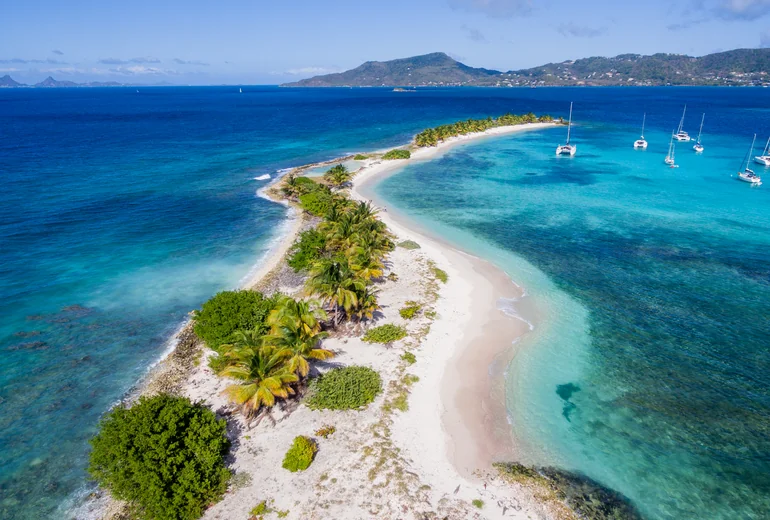
Mid-March (avoiding regatta-specific weeks) or early-April. Trade winds at their most reliable, sea at peak temperature, weather predictability at its annual best, and prices off the Christmas peak. May is the value-leader if you can flex on the regatta atmosphere.
Operationally yes for some operators, but the named-storm risk and the reduced fleet availability make most charterers wait. Bahamas-based operators with hurricane-hole infrastructure offer the most year-round availability. Charter cancellation insurance is mandatory for hurricane-season bookings on most operators.
On average yes, by 5-8% across most regions. Premium catamarans up more (6-10%); standard monohulls roughly flat after inflation. Crew rates (skipper, chef) up faster than vessel rates due to labour-cost pressure.
If you’re racing or specifically want the regatta atmosphere, yes — book 8-10 months ahead. If you want a quiet charter, book the week before or after. The regatta saturates Antigua’s harbours and creates a different experience from a standard charter week.
Grenada and the Grenadines remains the cost-leader Caribbean cruising ground in 2026, with Martinique close behind. Both run 15-25% under BVI and St Martin equivalents. The trade-off is fewer marina-and-restaurant infrastructure stops; the upside is quieter anchorages and lower per-person costs.
Provisioning has shifted markedly in the past three Caribbean seasons. Tortola’s Bobby’s Marketplace and Riteway in Road Town remain the standard BVI provisioning stops; in St Martin both Marigot’s Le Grand Marché and the Simpson Bay Lagoon-side Carrefour cover full charter weeks. For higher-end provisioning, several Caribbean operators now offer full pre-charter delivery to the boat — substantial groceries, premium drinks, prepared meals — with 24-hour notice. Per-person costs run roughly $180-260 for a substantial week’s provisioning plus $50-90 per dinner ashore at typical beach-bar pricing.
Fuel runs $1.40-1.85 per litre across most Caribbean fuel docks (BVI, USVI), notably cheaper than Mediterranean equivalents. Marina overnight rates: Soper’s Hole (BVI) $90-150, Marigot Bay (St Martin) $130-220, Marsh Harbour (Bahamas) $80-140 in 2026 for a 50-foot catamaran. Most Caribbean charter weeks rotate 5-6 nights at anchor or mooring buoys and 1-2 marina nights for shore visits and provisioning, keeping the marina-fee total reasonable.
Six short questions, then a real reply within four working hours.