Antigua & Barbuda 7-Night Catamaran Itinerary: English Harbour to Pink Sand
A week-long Antigua catamaran itinerary linking Nelson’s Dockyard, the island’s best bays and a two-night Barbuda detour to the pink-sand beach.
Read more
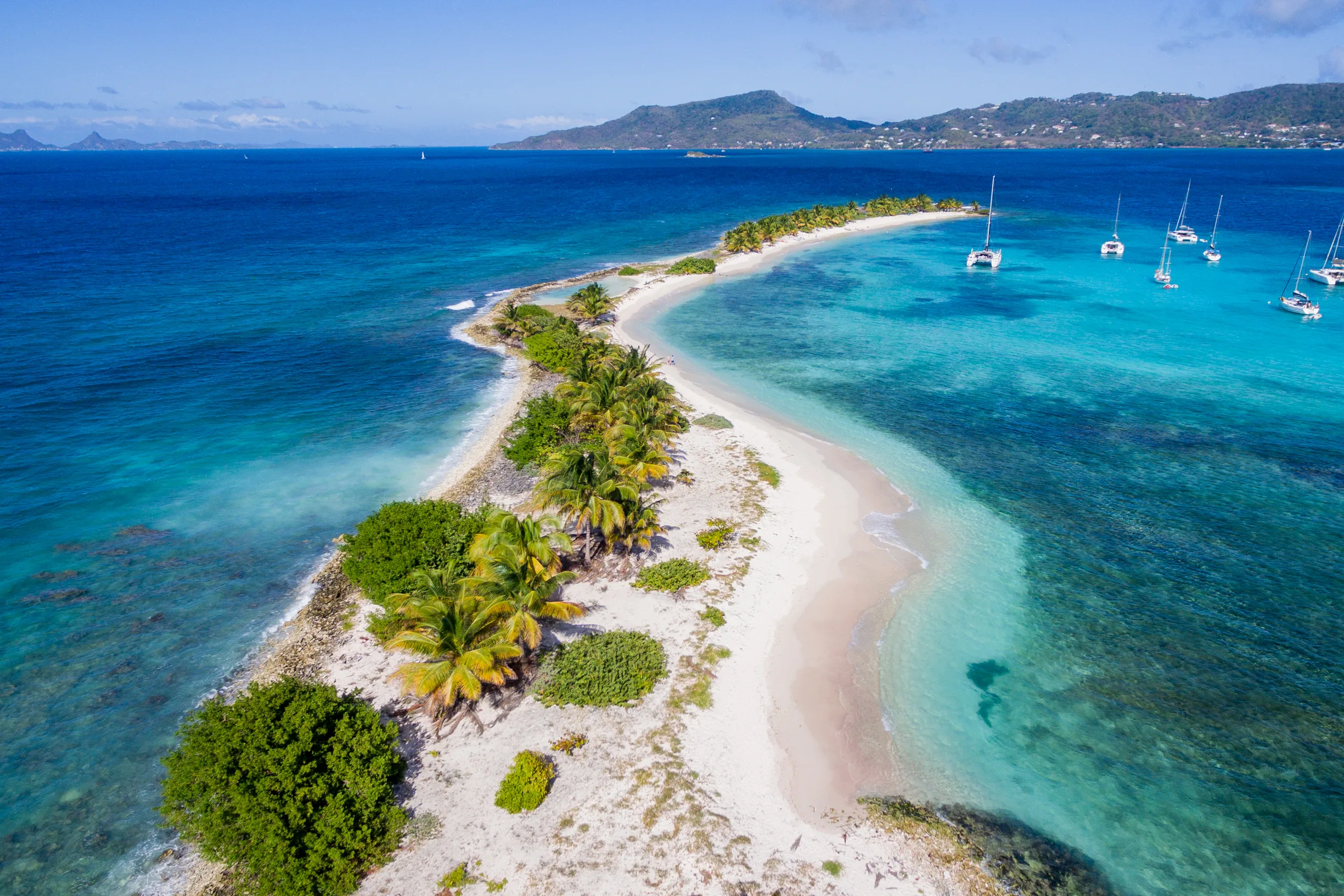
Put the two charter grounds side by side and the numbers tell the story before the scenery does. The British Virgin Islands run the largest charter fleet on the planet — hundreds of catamarans based within a few miles of Road Town. The Grenadines, scattered across St Vincent and the Grenadines, float a tiny fraction of that. That single gap shapes everything from how far ahead you book to what you pay.
This Grenadines vs BVI charter comparison is really about scarcity economics, and then about what kind of week you actually want. One is the world’s most convenient cruising ground; the other is closer to wilderness. Both are superb. They are not interchangeable.
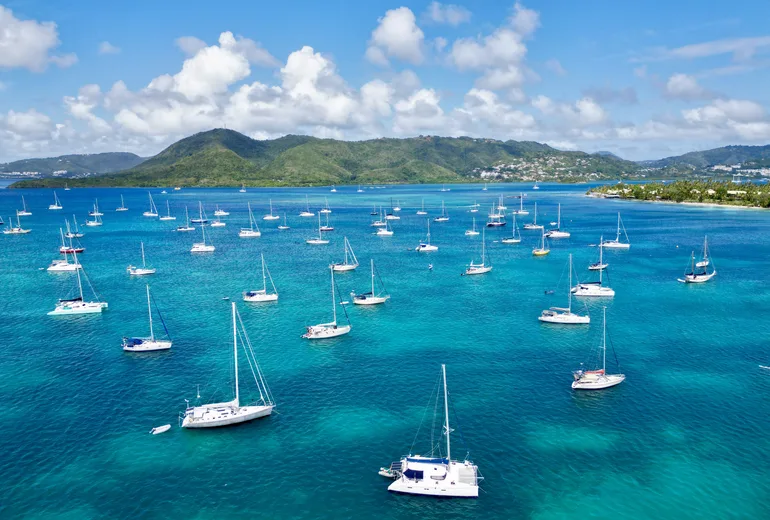
The BVI’s enormous base fleet means there is almost always a boat — even for a same-season booking you can usually find something in your size band. Competition between operators keeps pricing keen, spares and service are immediate, and a mechanical problem rarely costs you more than an afternoon because a replacement part or boat is close by.
The Grenadines fleet is a different animal. With far fewer catamarans based in the region, the good boats in school-holiday weeks sell out a full season earlier than their BVI equivalents. There is less price competition, fewer last-minute options, and if something breaks, the nearest spare may be a ferry ride away. Scarcity is not a flaw — it is the reason the anchorages stay quiet — but it does demand earlier planning.
The base situation reinforces it. The BVI concentrates its boats around a handful of large bases near Road Town, so logistics — provisioning, briefings, hand-backs — are slick and standardised. The Grenadines spreads a smaller fleet across bases that may be on different islands entirely, which means more variation in what you get and a longer reach for support. Neither is better; they are simply different operating realities that flow straight from the fleet-size gap.
For the BVI, booking six to nine months out usually secures a strong boat for peak winter weeks, and shoulder seasons can be had closer in. For the Grenadines, the prime catamarans for Christmas, February half-term and Easter routinely go twelve to eighteen months ahead. If your dates are fixed by school holidays, the Grenadines is the one to lock first.
Our guide to how far in advance to book a Caribbean catamaran lays out the season-by-season lead-time ladder in detail. The short version: treat the Grenadines as the scarcer commodity and book it like one.
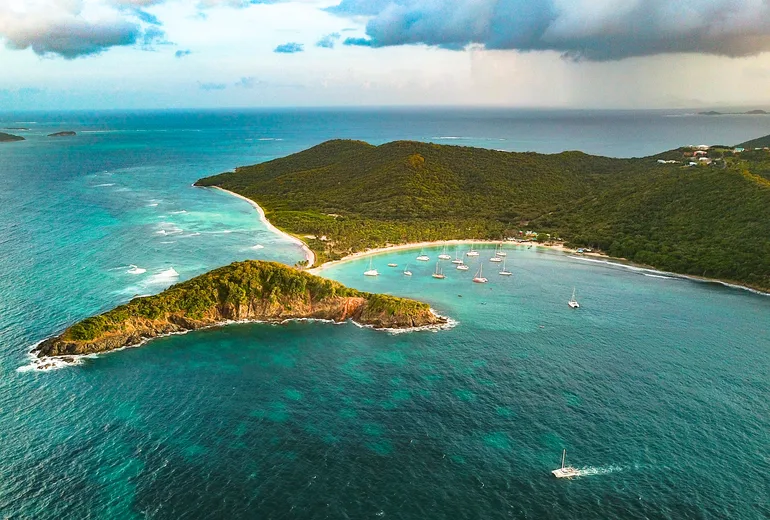
The BVI is famous for line-of-sight sailing in flat, protected water. The Sir Francis Drake Channel is a 20-mile corridor with islands on both sides, short hops between anchorages, and a mooring ball waiting at nearly every stop. It is the easiest serious cruising ground in the Caribbean, which is exactly why first-timers and families love it — and why it can feel busy in season.
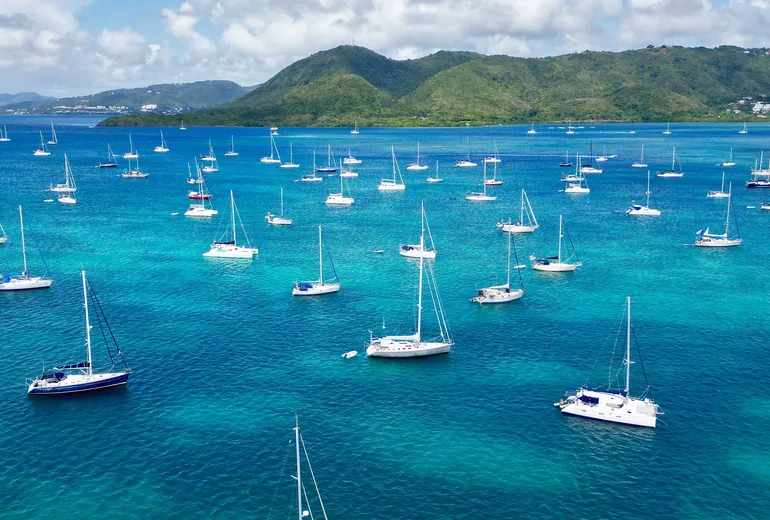
The Grenadines ask more of you and give more back. Passages between St Vincent, Bequia, Mustique, Canouan and the Tobago Cays are open-water and current-swept, with proper trade-wind sailing rather than short motors. Anchorages are wilder and emptier; the Tobago Cays marine park is a reef lagoon with turtles and barely a building in sight. You earn the solitude, and on a catamaran the longer reaches are a pleasure rather than a chore.
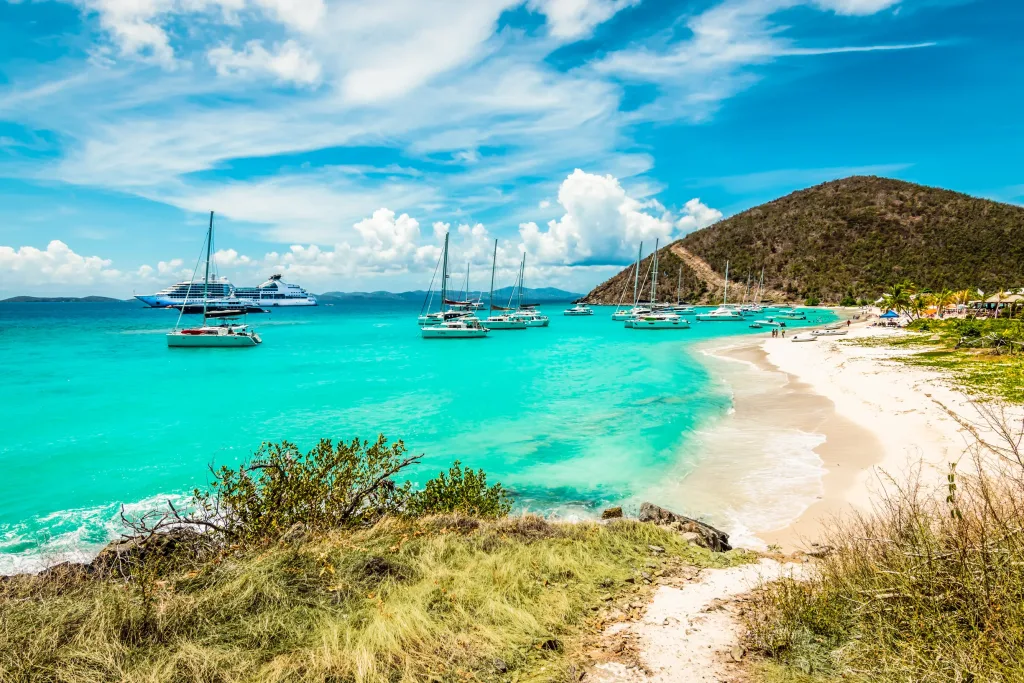
The character of the stops differs too. The BVI’s social life is built around famous beach bars — the Soggy Dollar at White Bay, Foxy’s, the Willy T floating bar — and you are rarely alone. The Grenadines trades that for fishing-village authenticity: Port Elizabeth on Bequia with its model-boat builders and the Sunday-night barbecues, the lobster grills on the beach at the Tobago Cays, the exclusive hush of Mustique. If your idea of a charter is a lively bar crawl by dinghy, the BVI wins; if it is empty reefs and local rhythm, the Grenadines does.
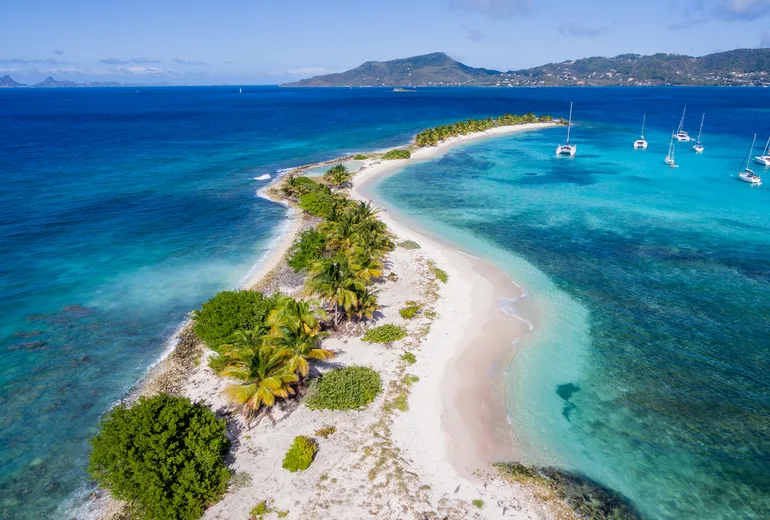
The BVI runs on mooring balls and reservation apps; you rarely set your own anchor. The Grenadines is more anchor-and-go, with fewer organised fields, which suits crews who like self-reliance and dislike the BVI’s nightly mooring fees. Neither is harder for a catamaran — the shallow draft helps in both — but the rhythm of the day is different.
Headline boat rates can look similar, but the surrounding costs diverge. The BVI piles on cruising permits, National Parks fees and nightly moorings that add up fast — see our breakdown of the full Caribbean catamaran charter cost for the line items. The Grenadines has its own park and harbour fees, but fewer mooring nights, and provisioning is patchier and pricier because supply lines are longer.
The deeper difference is value of scarcity: in the Grenadines you pay partly for emptiness. Fewer boats means quieter beaches and reefs, which for some crews is worth more than any saving. For a worked numbers comparison across grounds, our BVI versus Bahamas versus Grenadines cost-per-person-per-day analysis puts real figures on the trade-off.
Choose the BVI if you want easy logistics, short hops, lively beach bars, a forgiving learning curve and the confidence of a huge fleet behind you. It is the right call for first charters, families with young kids and groups who want maximum certainty. Our British Virgin Islands catamaran charter guide covers the ground in full.
Choose the Grenadines if you want real sailing, empty anchorages, the Tobago Cays and a stronger sense of remoteness — and you are willing to book early and provision carefully. Crews who have done the BVI and want the next step often find the Grenadines is it. Our 7-day Grenada and Grenadines sailing itinerary shows what a week down there actually looks like.
If this is your first Caribbean charter or you are sailing with small children, start with the BVI. If you have chartered before, crave solitude and can commit your dates a year out, the Grenadines will reward you. And if you cannot decide, let lead time decide for you: the Grenadines is the boat to book first, because by the time the BVI fleet is filling, the Grenadines may already be gone.
One more way to think about it: getting there. The BVI is an easy hop from US and European hubs via St Thomas or Tortola, while the Grenadines usually means a connection through Barbados or St Lucia and a smaller onward flight or ferry. That extra travel filters the crowds — part of why the southern anchorages stay quiet — but it also means the Grenadines rewards a longer trip. If you are flying a long way and going to the trouble of the connections, ten nights makes far more sense than seven. Whichever you choose, the catamaran is the same friend in both grounds; the real variable is the kind of week you are after.
The Grenadines, by a clear margin. Its small catamaran fleet means prime peak-season boats sell out roughly a season earlier than comparable BVI boats. If your dates are fixed by school holidays, book the Grenadines first and slot the BVI around it.
It is more demanding. Passages are open-water and current-swept rather than the BVI’s short, protected hops, and there are fewer mooring fields and support services. Experienced crews enjoy the proper trade-wind sailing; first-timers usually find the BVI an easier place to start.
Boat rates can be similar, but the cost mix differs. The BVI adds heavy permit and nightly mooring fees, while the Grenadines has fewer moorings but pricier, patchier provisioning. You also pay indirectly for the Grenadines’ emptiness, which many crews consider the point.
Easily. A catamaran’s shallow draft and stability suit both the BVI’s reef anchorages and the Grenadines’ open reaches and the Tobago Cays lagoon. The boat is not the deciding factor — your appetite for convenience versus wilderness, and how early you can book, are.
Still weighing the two? Compare routes and boats across both grounds on our Caribbean catamaran charter destinations page and book the scarcer one first.
Six short questions, then a real reply within four working hours.