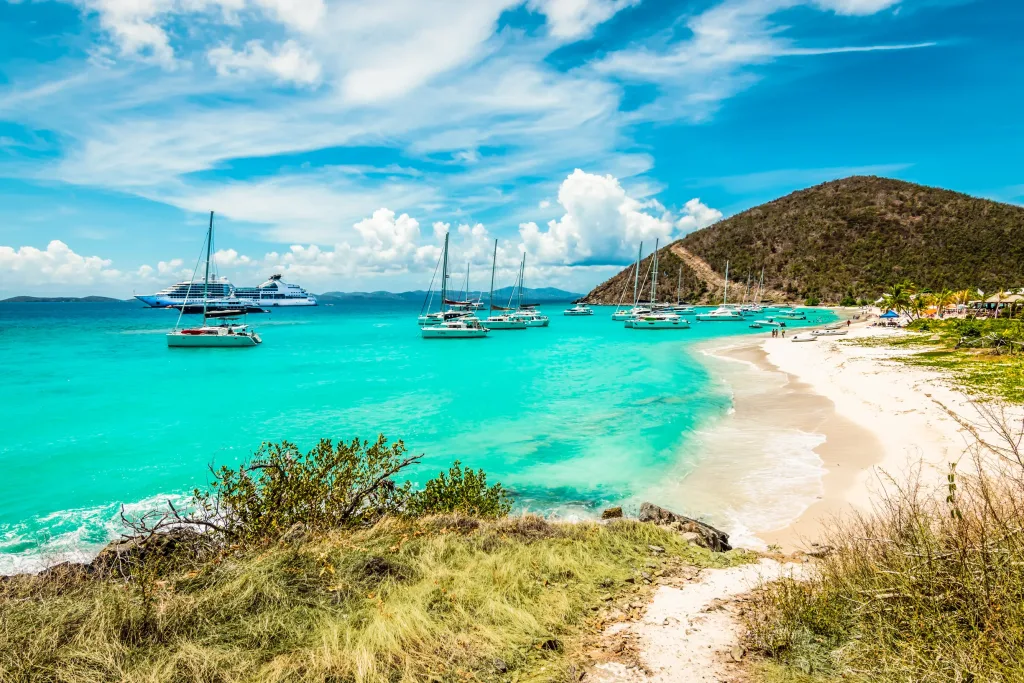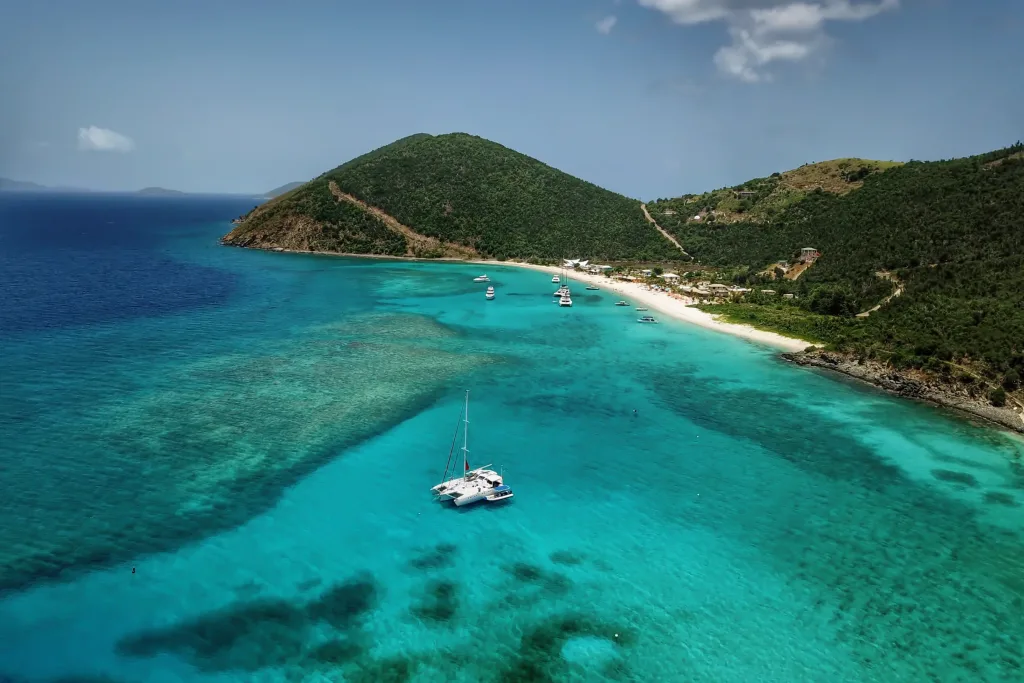
Thanksgiving Catamaran Charter 2026: The Caribbean’s Best Last-Minute Window
Why late November is the quiet pre-peak window for a Caribbean catamaran, with fresh boats and pre-holiday rates while there’s still availability.
Read more
Updated June 2026.
The best time charter Caribbean 2026 question has a textbook answer (December-April) and an operator’s answer (May or November for value). This piece breaks down the year month by month, lays out the 2026 hurricane window in practical terms, and shows where the regions diverge — the BVI and the southern Caribbean (Grenada, Trinidad) have very different summer risk profiles.
Peak season runs from the second week of December through the end of April. Trade winds settle into the 15-22 knot range, day-after-day. Water temperature stays in the 27-28 °C band. Hurricane risk is statistically near-zero. Christmas and New Year are the absolute peak — rates 30-40% above the rest of the season. February and March follow as the high points for school holidays. April closes the peak with slightly warmer water and the first hints of softer trades.
Booking lead time: 9-12 months for Christmas/New Year, 6-9 months for February-March, 4-6 months for April. Late deals exist but selection is thin.
May is the single best value month of the year. Trade winds remain steady through the first three weeks, water is at its warmest pre-hurricane, and rates drop 20-30% below peak as families with school-age kids exit. Hurricane risk in May is statistically very low (the season official start is 1 June). Restaurants and bars are still fully open. Mooring fields have room. Charter base availability is good with 2-3 months lead time.
The watch-out: the last week of May can see early-season disturbances, and the trade-wind pattern softens toward month-end. Plan May charters for the first three weeks if possible.
The Atlantic hurricane season officially runs 1 June through 30 November. June and the first half of July are statistically the quietest of those months — storms form but typically west of the Lesser Antilles and head for the Gulf of Mexico. Rates drop 35-45% below peak in this window. Trade winds are lighter (10-15 knots) and more variable. Heat and humidity build.
The practical assessment: chartering in June-mid-July is reasonable with three caveats. First, named-storm clauses apply — check the operator’s specific terms. Second, restaurants and bars start closing through the latter half of July. Third, the BVI charter fleet remains in place; most southern Caribbean fleets stay open year-round.
The statistical peak of the Atlantic hurricane season is 10 September. Late August through the end of September is when charter operations meaningfully change. Most BVI operators (The Moorings, Sunsail, Dream Yacht Charter) relocate the bulk of their fleet to northern bases or out of the region entirely. The remaining fleet operates on reduced schedules. Many beach bars and restaurants close for 4-6 weeks. Booking new charters for this window is unusual — pricing exists but selection is very thin.
The southern Caribbean (Grenada, Trinidad, the southern Grenadines) is technically below the hurricane belt and stays operational year-round. The risk is still present but the historical hit rate on Grenada is roughly one major storm every 12-15 years.
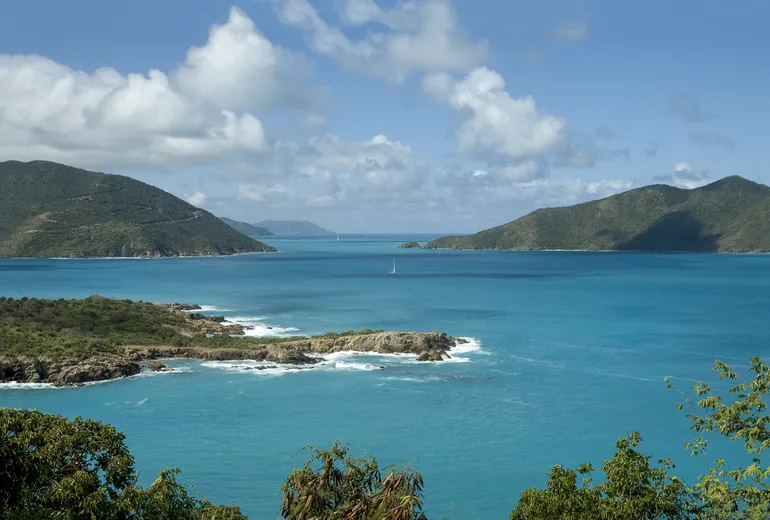
From mid-October the hurricane risk begins to wane. Operators start returning boats to the BVI through October. By the first week of November, the bulk of the fleet is back. Restaurants and bars reopen on a staggered schedule. Trade winds begin to rebuild. Rates remain 20-30% below peak through mid-November.
The practical assessment: the second half of October is operator-judgment territory — some open, some hold for early November. The first three weeks of November are a value sweet spot — water at its warmest of the year, trades rebuilding, peak crowds still six weeks away.
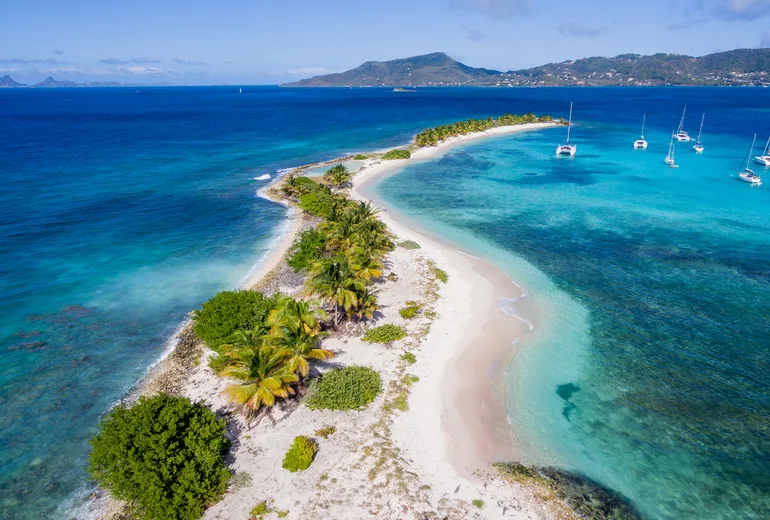
By the first week of December, trade winds are typically back in the 15-22 knot range and hurricane risk is statistically over. Rates climb steadily through the month, with the Christmas-New Year peak charging 30-40% above standard peak.
The 2026 Atlantic hurricane outlook (NOAA preliminary, published spring 2026) forecasts an above-normal season with 15-19 named storms expected. ENSO is currently neutral leaning toward La Niña by late summer, which typically supports Atlantic activity. The Loop Current and Gulf temperatures support development.
The practical implication for charter planning: the named-storm clause matters more in 2026 than in an average year. Most operators offer free reschedule within 90 days of a confirmed named storm impacting the cruising area. Trip insurance with named-storm coverage adds $80-200 per person per week and is worth the cost for May-October bookings.
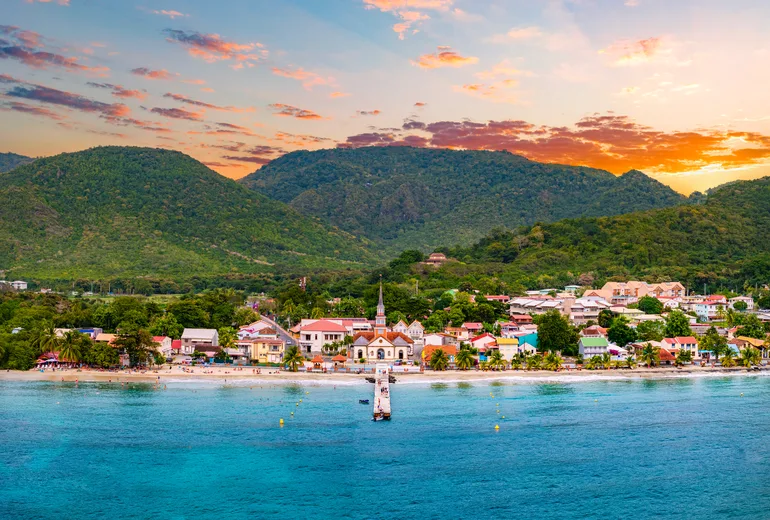
The BVI sits in the Lesser Antilles’ hurricane corridor. June-November risk is real, fleet relocates in late summer, restaurants close. Plan BVI charters for December-May.
Martinique and Guadeloupe sit further south, with reduced but real hurricane exposure. Most French Caribbean operators run year-round but adjust schedules in August-September. Plan French Caribbean charters for December-May for peak conditions, May or November for value.
Grenada and Trinidad are below 12°N latitude, technically below the hurricane belt. Most operators run year-round with normal pricing through summer. The 2026 sweet-spot southern Caribbean weeks are June and mid-October-November.
Two layers of coverage apply: the operator’s named-storm clause and the client’s trip insurance. The operator clause typically guarantees free reschedule within 90 days if a confirmed named storm impacts the charter base or cruising area during the booked week. Trip insurance covers the wider scenarios — pre-trip cancellation, medical evacuation, lost luggage — and is the catch-all. Together they reduce the financial downside of summer chartering to roughly zero, even if the experiential downside (a stormy week, closed bars) remains.
Operator named-storm clauses typically guarantee free reschedule within 90 days of any confirmed named storm impacting your cruising area. Check the specific clause language at booking. Trip insurance with named-storm coverage is the second layer.
May for the start of summer feel, longer days, slightly warmer water; November for warmer water (peak annual), confirmed end of hurricane risk by mid-month, and the lowest crowds. Most operators rate the first three weeks of November as the best value of the entire year.
Operator policies typically require an actual named storm to trigger refund/reschedule. A forecast or a tropical wave does not. This is what trip insurance covers.
Statistically yes. Grenada’s last direct major hit was 2004 (Ivan); historical strike frequency is roughly one major every 12-15 years. The northern Caribbean (BVI, USVI, St. Martin) sees direct hits or close-passes nearly every year during peak season.
Trade-wind setup is normally complete by 1 December but can be variable in some years. The safer call for a December charter is the second or third week — trades are reliably rebuilt and Christmas pricing has not yet kicked in.
Plan around the season with the 2026 Caribbean season calendar and regattas or the full cost breakdown.
Six short questions, then a real reply within four working hours.