Anegada Lobster Festival 2026 (27-29 Nov): Plan a Catamaran Charter Around It
How to sail to the Anegada Lobster Festival 2026 by catamaran, with the mooring crunch, a route from Tortola and where to eat your way along the beach.
Read more
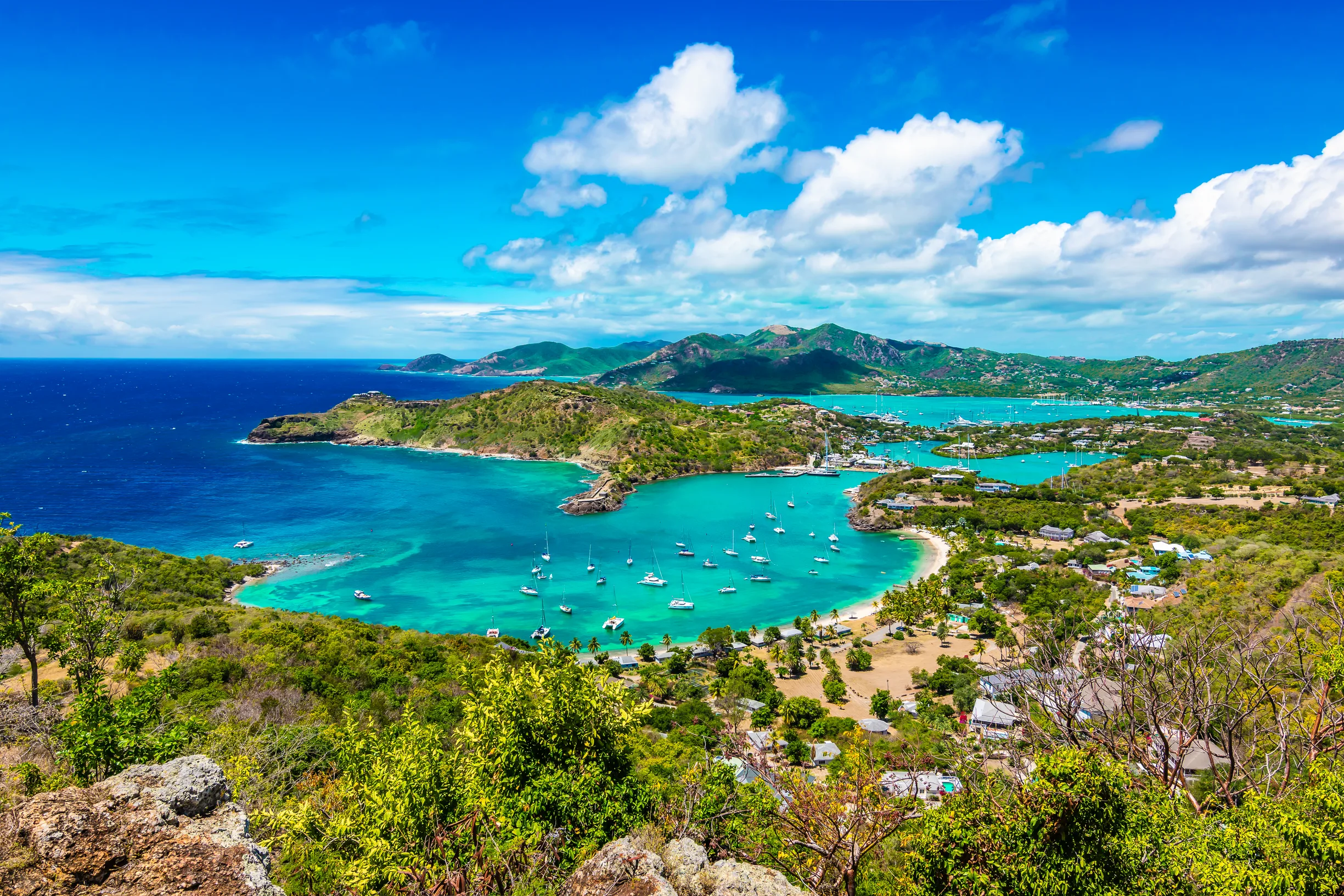
Antigua claims 365 beaches, one for every day of the year, and a week’s sailing gets you to a good many of them. But the real reason to plan an Antigua catamaran itinerary is the pairing with Barbuda, its quiet, low-lying sister island 30 miles north, where a single beach of pale pink sand runs unbroken for miles and frigatebirds wheel over a lagoon by the thousand.
This 7-night route links Antigua’s historic English Harbour, its string of protected south and west-coast bays, and a two-night Barbuda detour, with proper trade-wind reaching between them. It’s pitched at winter 2026/27 bookers who want history, beaches and genuine sailing in one week.
Antigua sits in the northeast Leewards and catches the trade winds square on, which means real sailing rather than motoring between anchorages. Its deeply indented south coast hides a series of reef-protected harbours, and the historic naval base at English Harbour gives the week an anchor point steeped in Nelson-era history. The island is well set up for charter, with a fleet based around Jolly Harbour and Falmouth.
Barbuda is the counterweight: flat, sparsely populated, and ringed by some of the emptiest beaches in the Caribbean. The crossing demands a settled forecast and good light for the reef-strewn approach, which is exactly why it rewards a catamaran’s shoal draft and stable ride. Together they give you a week with range, from dockyard dinners to a beach where you might not see another soul. For a sense of how Antigua’s conditions shift through the year, our Caribbean sailing season calendar and regattas guide covers the winter trade-wind pattern.
Start at Jolly Harbour or Falmouth, provision, and make your first stop English Harbour, a short hop around the south coast. This is the historic heart of Antigua: Nelson’s Dockyard, a restored Georgian naval base and UNESCO World Heritage Site, sits right on the water, and you can berth stern-to in the dockyard itself or anchor in adjacent Freeman’s Bay below Shirley Heights.
Spend a full day here. Walk the dockyard’s stone buildings and the sail loft pillars, climb to the Shirley Heights lookout for the view back over the twin harbours, and if your timing lands on a Sunday, the Shirley Heights barbecue with steel band and reggae is an institution. Eat at the dockyard restaurants or the Catherine’s Café across Pigeon Beach, and stock up on anything you forgot before heading west, because provisioning thins out from here.
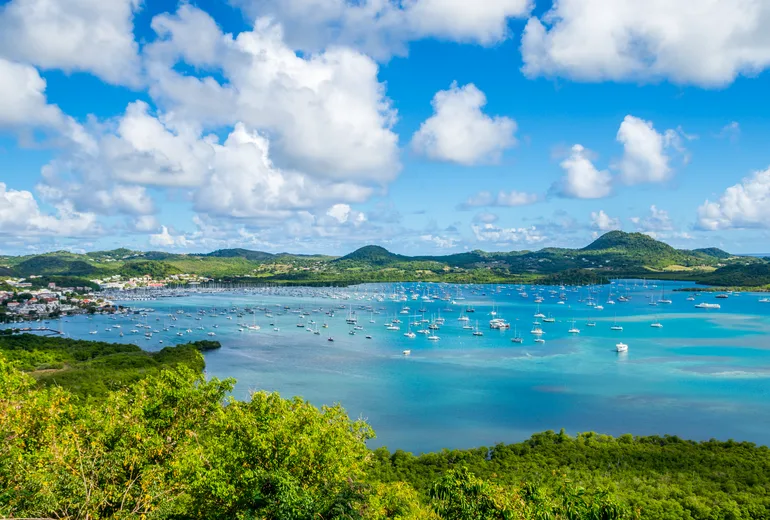
From English Harbour, work west along the coast. Falmouth Harbour next door is a vast, well-protected bay popular with superyachts and a good lunch or overnight stop. Continue to the cluster of anchorages on the southwest corner: Carlisle Bay, with its sweep of sand backed by green hills, and the reef-sheltered waters off the Jolly Harbour stretch make for easy, settled nights.
The standout day stop on this coast is Green Island on the southeast corner, reached by working back to windward, a beautiful uninhabited islet with reef-protected Nonsuch Bay behind it, superb snorkelling and turquoise shallows that a catamaran can nose right into. If the wind’s up, the south-coast reefs give you sheltered alternatives all the way along. Build in an unhurried beach day here; you’ll want energy for the Barbuda run.
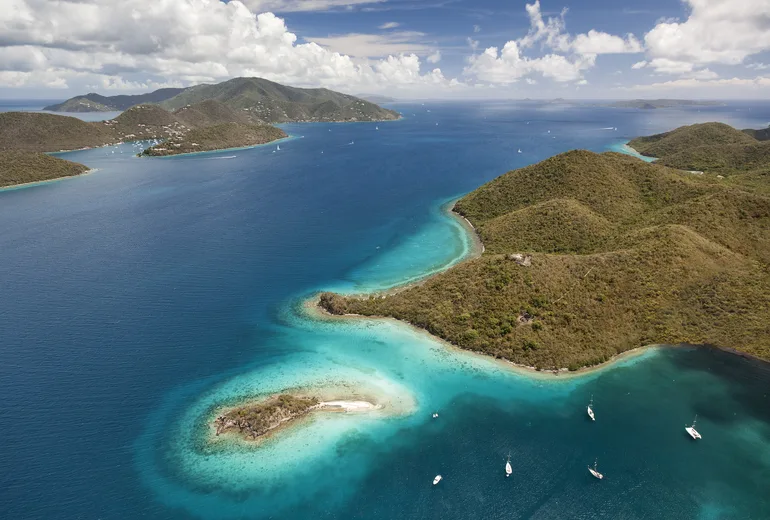
The trades typically blow east to northeast at 15 to 20 knots through the winter, which makes the along-coast legs lively beam reaches and the windward stretch to Green Island a proper upwind workout. Reef early if it’s blowing, watch for the well-charted reefs that define this coast, and use the overhead sun to read the water as you approach the shallower anchorages. These are short distances, rarely more than 10 to 12 nautical miles between stops, so you sail in the good middle of the day.
Antiguan cooking leans on the sea and the garden. Look for fungie and pepperpot, the national dish of cornmeal dumplings with a slow-cooked stew, and saltfish breakfasts at the dockyard cafés. Conch, snapper and lobster turn up grilled at the waterfront restaurants around Falmouth and English Harbour, and the local Wadadli beer and Antiguan rum punch round off most evenings ashore. Provision the main shop at Jolly Harbour, where the supermarket is the best stocked on the island, before you head east and south; the smaller harbours have only basics, and Barbuda has next to nothing. Budget roughly $40 to $60 a head for a relaxed dinner with drinks at the better dockyard spots, less at the casual beach bars.
The week’s highlight is the run north to Barbuda, roughly 30 nautical miles from Antigua’s north coast, around four to five hours on a reach in steady trades. Pick a settled forecast: the approach to Barbuda’s west coast crosses shallow, reef-scattered water, so you want good light and calm conditions to read your way in. Most crews anchor off the long stretch of beach on the southwest side, near Coco Point and the spit that shelters Cocoa Point and the famous Pink Sand Beach.
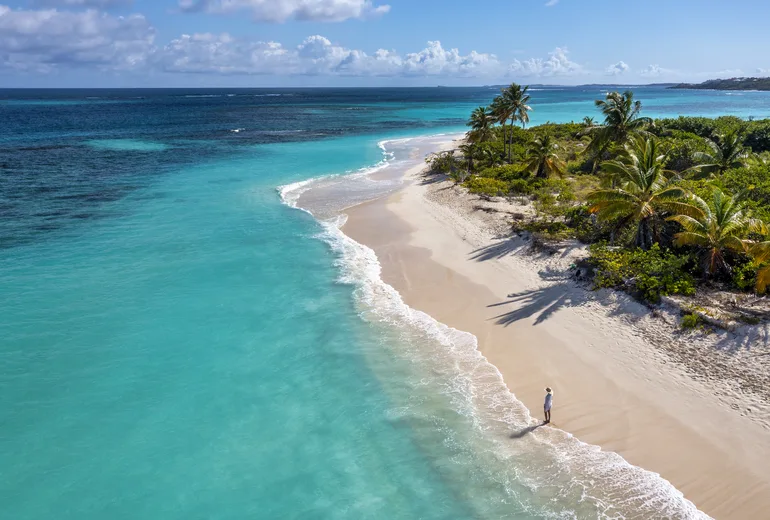
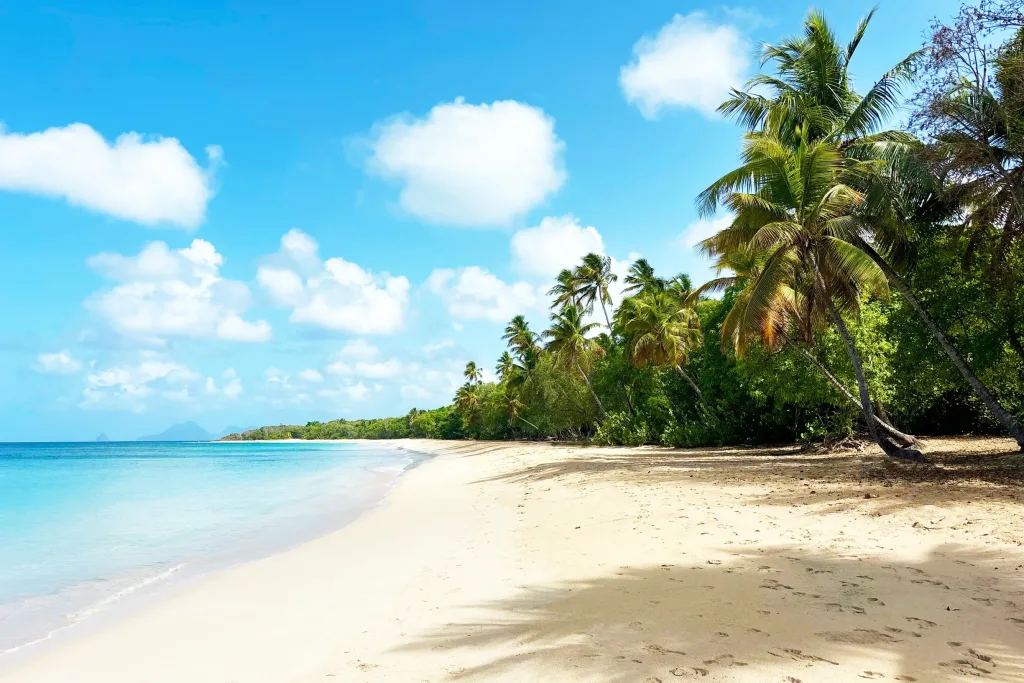
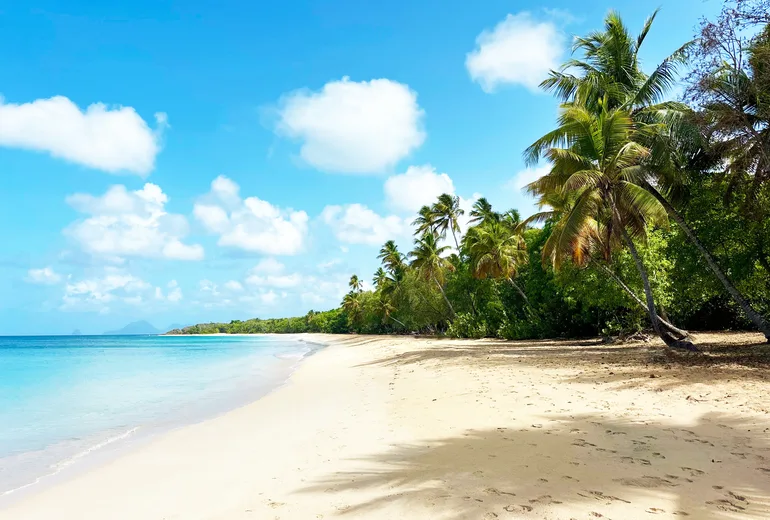
This is why you came. Barbuda’s southwest shore is a near-continuous run of pale, blush-pink sand, the colour coming from crushed coral and shell, often with not another boat in sight. The water is shallow and impossibly clear over white sand. Anchor well, swim ashore, and spend a slow day walking a beach that goes on for miles.
The other Barbuda must-do is the Frigate Bird Sanctuary in Codrington Lagoon, one of the largest colonies of magnificent frigatebirds in the world. You reach it by arranging a local boatman to take you up the lagoon, where thousands of birds nest in the mangroves and the males inflate their scarlet throat pouches in breeding season. It’s an easy half-day excursion and unlike anything else on a Caribbean charter. Provisioning and services on Barbuda are minimal, so arrive self-sufficient with full water and stores.
For dinner ashore, the small village of Codrington has a handful of local spots, and a few beach operations near Coco Point grill lobster and fresh fish when they’re open, though hours are informal and worth confirming on arrival. Many crews simply cook aboard here, which suits the off-grid feel of the place: a barbecue on the back step, the anchor light the only thing visible for miles, and a sky thick with stars once the sun drops. Anchoring is in sand off the southwest beach; set the hook well and keep an eye on any forecast wind shift, since the western shore offers little protection if the breeze swings into the west or southwest. It rarely does in settled winter trades, but it pays to have a return plan toward Antigua if conditions look like changing.
Sail back south to Antigua on the seventh day, an easier downwind-of-the-beam run that often turns into the best sail of the week. Time it to give yourself a final relaxed night at Carlisle Bay or near your base at Jolly Harbour before the morning handback. If you’ve got an extra evening, a sundowner anchorage on the west coast sends the trip off well, and a last swim off the trampoline before dinner is a fitting way to close out an Antigua catamaran itinerary that has covered Georgian naval history, near-empty pink-sand beaches and some of the most reliable trade-wind reaching anywhere in the eastern Caribbean.
For where this route sits on the map of value across the region, our comparison of BVI, Bahamas and Grenadines charter cost per person per day is a useful gut-check, and to nail the timing of a winter 2026/27 booking, see our guide to the best time to charter a catamaran in the Caribbean.
A typical week starts at Jolly Harbour or Falmouth, spends two days at English Harbour and Nelson’s Dockyard, works the south and west-coast bays including Green Island, then crosses to Barbuda for two nights at the pink-sand beach and the frigatebird sanctuary, before sailing back to Antigua on the final day. Distances between Antigua stops are short, while the Barbuda crossing is around 30 nautical miles.
The crossing itself is straightforward in settled trades, around four to five hours on a reach, but Barbuda’s approach crosses shallow, reef-scattered water. Pick a calm forecast with good overhead light so you can read the water on the way in, and arrive self-sufficient, as services and provisioning on Barbuda are very limited. A shoal-draft catamaran handles the approach well.
Barbuda’s southwest shore gets its pale pink tint from crushed coral and shell mixed into the white sand, which gives the beach a soft blush colour in the right light. It runs almost unbroken for miles along the Coco Point side, and you’ll often have long stretches of it entirely to yourself, with shallow, clear water just offshore.
English Harbour is home to Nelson’s Dockyard, a restored Georgian naval base and UNESCO World Heritage Site you can berth or anchor right beside. Walk the historic buildings and sail-loft pillars, climb to the Shirley Heights lookout for the view, and time a visit for the Sunday-evening barbecue with steel band and reggae if you can. Several restaurants line the harbour.
The winter dry season, roughly December to April, brings the steadiest trade winds, typically 15 to 20 knots from the east-northeast, and the most reliable conditions for both the coastal sailing and the Barbuda crossing. Late April also hosts Antigua Sailing Week, one of the Caribbean’s premier regattas, if you want racing alongside your cruising.
Ready to sail Antigua and Barbuda this winter? Explore boats and dates on our Caribbean catamaran charter destinations page and lock in a 2026/27 week while the best boats are still open.
Six short questions, then a real reply within four working hours.