Thanksgiving Catamaran Charter 2026: The Caribbean’s Best Last-Minute Window
Why late November is the quiet pre-peak window for a Caribbean catamaran, with fresh boats and pre-holiday rates while there’s still availability.
Read more
Sticker prices lie a little when you compare Caribbean charter destinations, because the base boat rate is only part of the story. Taxes, park fees, and mooring charges vary enormously between regions, and they can swing the real BVI vs Bahamas vs Grenadines charter cost by hundreds of dollars per person before you have bought a single dinner ashore.
So instead of comparing weekly boat quotes, this guide works the numbers down to cost per person per day, all-in, and lands on rough figures of about 435 dollars for the BVI, 575 for the Bahamas, and 970 for the Grenadines. Those gaps are not arbitrary; they come from fleet size, fees, and how remote each cruising ground is. Just as important is who each destination actually suits, which the price alone never tells you.
To compare fairly, picture the same trip in each place: a mid-size catamaran sleeping eight, chartered for seven nights, split among a full group. Then add the costs that genuinely differ by region: charter taxes, cruising permits, national park fees, and mooring or anchoring charges. Fuel and provisioning are broadly similar everywhere, so the regional spread comes mostly from the fee structure and from how much boat your money buys.
The figures below are all-in per-person-per-day estimates for a full boat in the standard high season. They are guides, not quotes; your exact number depends on boat, season, and group size. For the underlying boat-rate math that feeds these totals, our BVI versus French Caribbean cost breakdown shows how the base rate and fees stack up in two of these regions.
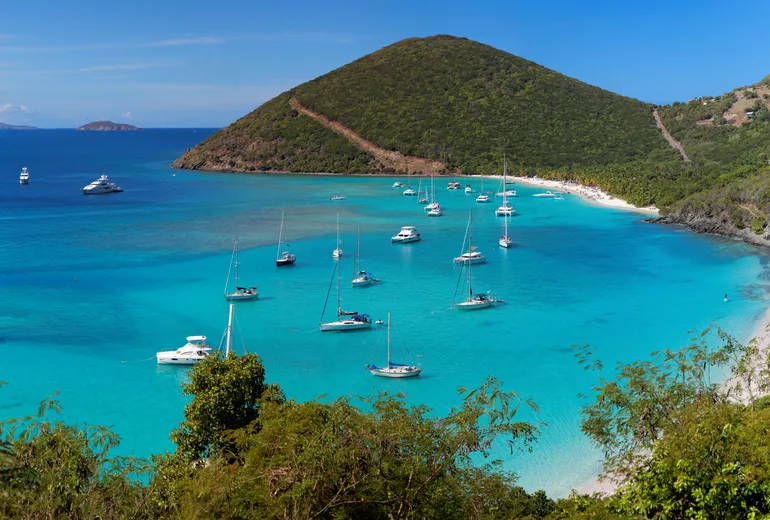
The BVI is the most affordable of the three for a simple reason: it has the world’s largest charter fleet, and competition keeps base rates keen. Short hops between Tortola, Norman Island, Virgin Gorda, and Jost Van Dyke mean low fuel use, and the infrastructure is dense, so provisioning and repairs are easy.
Fees here are moderate but real. Budget a cruising permit, national park trust fees for spots like The Baths, and mooring balls that typically run around 35 to 55 dollars a night at popular fields. They add up across a week, but the keen boat rate keeps the all-in figure the lowest of the trio. Distances back that up: a typical day-hop runs 5 to 12 nautical miles, often an hour or two of easy sailing, so fuel barely registers and you spend more of the day swimming than passage-making.
First-time charterers, families, and groups who want maximum sailing convenience for the money. The short distances, line-of-sight navigation, and busy beach-bar scene make it forgiving and fun. If you want the lowest barrier to entry and the most boat for your budget, this is it.
The Bahamas sits in the middle, and one line item explains much of the gap: a charter tax of around 14 percent that the BVI does not levy. That tax alone adds meaningfully to the per-person total. Distances are also longer across the Exuma banks, so fuel and planning matter more, and provisioning can cost more outside Nassau.
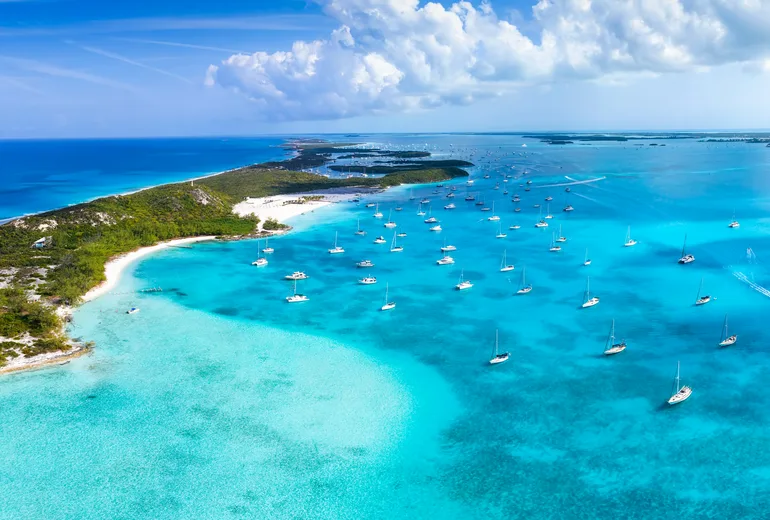
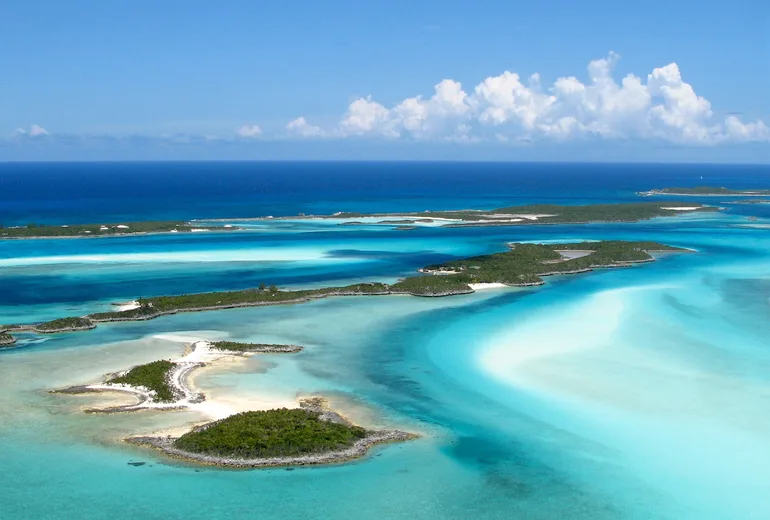
What you pay for is a different kind of cruising: vast turquoise banks, swimming pigs at Big Major Cay, Thunderball Grotto, and shallow, sandy anchorages that reward a catamaran’s draft. Park fees apply in the Exuma Land and Sea Park, and you will want to budget for them. Our complete Bahamas catamaran sailor’s guide to the Exumas and Abacos covers the routes and logistics in depth.
One practical caveat shapes the budget here: provisioning beyond Nassau gets thin and pricey, so most crews stock heavily before leaving and treat a mid-week resupply at Staniel Cay or Black Point as a top-up, not a full shop. Plan for it and the Bahamas rewards you; ignore it and you spend the week rationing fresh produce while the cost creeps up on convenience-store milk and beer.
Sailors who want bigger water, dramatic sandbars, and signature stops like the pigs and the grotto, and who do not mind paying the tax for them. It rewards a bit more sailing ambition than the BVI, and the photography is hard to beat. Couples and families both do well here if the budget stretches.
The Grenadines is the priciest of the three, and scarcity is the driver. The charter fleet based in St. Vincent and the Grenadines is a fraction of the BVI’s, so base rates run high and the best boats book far ahead. The cruising ground is also more remote, which lifts provisioning and logistics costs.
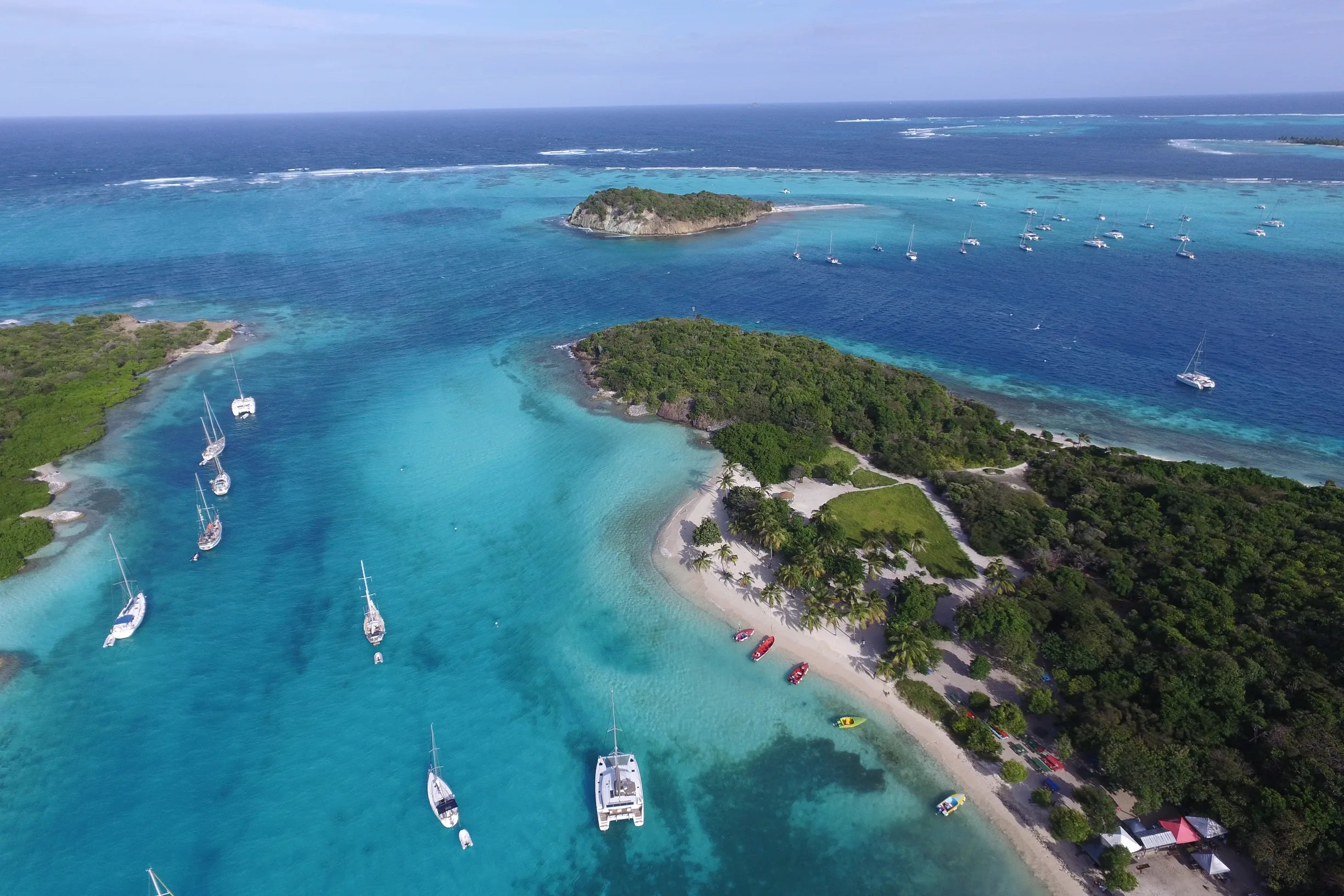
The payoff is wilderness most charter destinations cannot match. The Tobago Cays sit behind Horseshoe Reef with sea turtles and barely a building in sight; Bequia, Mayreau, and Mustique each have their own character; and the anchorages stay genuinely uncrowded. Park and anchoring fees apply, notably in the Tobago Cays Marine Park, but the real premium is the boat rate itself. The sense of remoteness here is the product, and it is not cheap to deliver.
Distances are longer than the BVI too, with hops of 15 to 25 nautical miles between the main islands and some genuinely open water on the run down from St. Vincent. That means more actual sailing, which experienced crews tend to relish and beginners sometimes underestimate. Boat-boys still paddle out at anchorages like Salt Whistle Bay selling ice, bread, and fresh-grilled lobster, a charming local trade worth a few small bills set aside, and one more reason the Grenadines feels a world apart from the busier northern grounds.
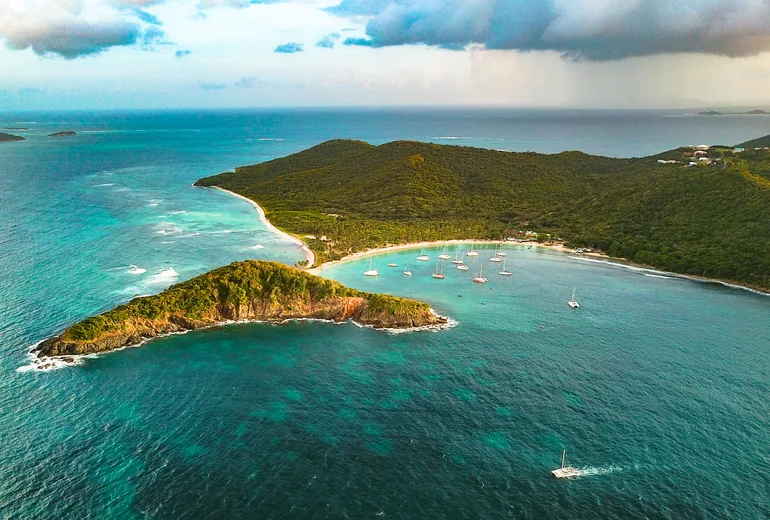
Experienced or repeat charterers chasing uncrowded anchorages and a wilder feel, who will pay for scarcity and plan well ahead. It is less about convenience and more about getting somewhere most people never reach by boat. If your priority is solitude over savings, the premium makes sense.
The headline spread, roughly 435 versus 575 versus 970, makes the BVI look like the obvious winner, but value depends on what you want. The BVI delivers the most sailing convenience per dollar. The Bahamas trades a tax and some distance for unique, photogenic cruising. The Grenadines charges a wilderness premium that some sailors consider the best money they spend.
Two practical notes shape the real bill. First, group size: a full boat slashes the per-person figure everywhere, so the gaps narrow if you fill the cabins. Second, lead time: the scarce Grenadines fleet and the prime BVI holiday boats sell out earliest, which feeds straight into price. Our guide to how far in advance to book a Caribbean catamaran explains how those lead times differ by destination and why booking early protects both choice and cost.
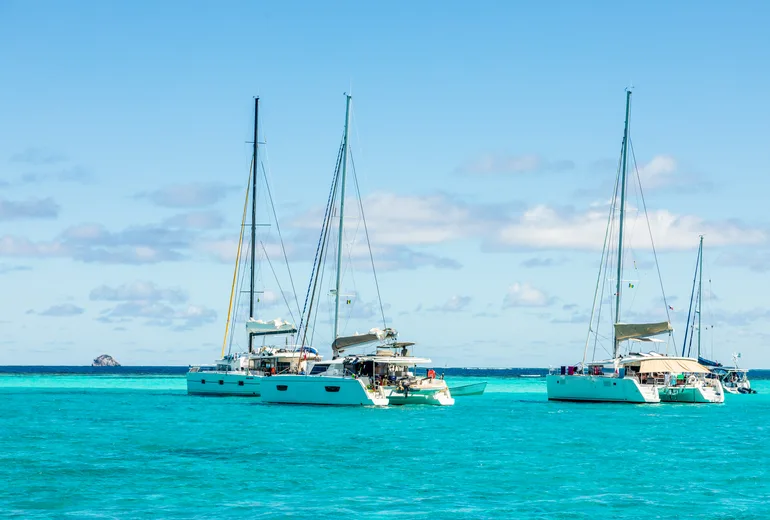
The British Virgin Islands, at roughly 435 dollars per person per day all-in for a full boat, thanks to the world’s largest charter fleet keeping base rates competitive. The Bahamas runs around 575 and the Grenadines around 970, driven by taxes, distance, and fleet scarcity respectively.
Mainly a charter tax of around 14 percent that the BVI does not levy, plus longer distances across the Exuma banks that raise fuel and planning costs, and pricier provisioning outside Nassau. You pay more, but you get bigger water, swimming pigs, and dramatic sandbars in return.
Scarcity. The fleet based in St. Vincent and the Grenadines is a fraction of the BVI’s, so base rates run high and the best boats book far ahead. The cruising ground is also remote, lifting logistics costs. The premium buys genuinely uncrowded anchorages like the Tobago Cays.
Yes, the per-person-per-day estimates fold in the costs that differ by region: charter taxes, cruising permits, national park fees, and mooring charges. They exclude variable extras like meals ashore, the crew tip on a crewed boat, and excursions, which depend on your own choices.
Fill the boat, since a full crew of eight or more sharply cuts the per-person figure everywhere. Sailing the shoulder season instead of peak helps too, and booking early protects against the price rises that hit scarce fleets like the Grenadines hardest.
Trying to match a destination to your budget and crew? Start with our Bahamas catamaran sailing guide for one of these regions in depth, then pick the cruising ground that fits how you want to sail.
Six short questions, then a real reply within four working hours.