

Caribbean Catamaran Charter from the USA: The Three-Hour Winter Escape
Miami nonstops, the St Thomas gateway, the BVI résumé rule, holiday-week pricing in dollars and the hurricane window for American crews.
Read more
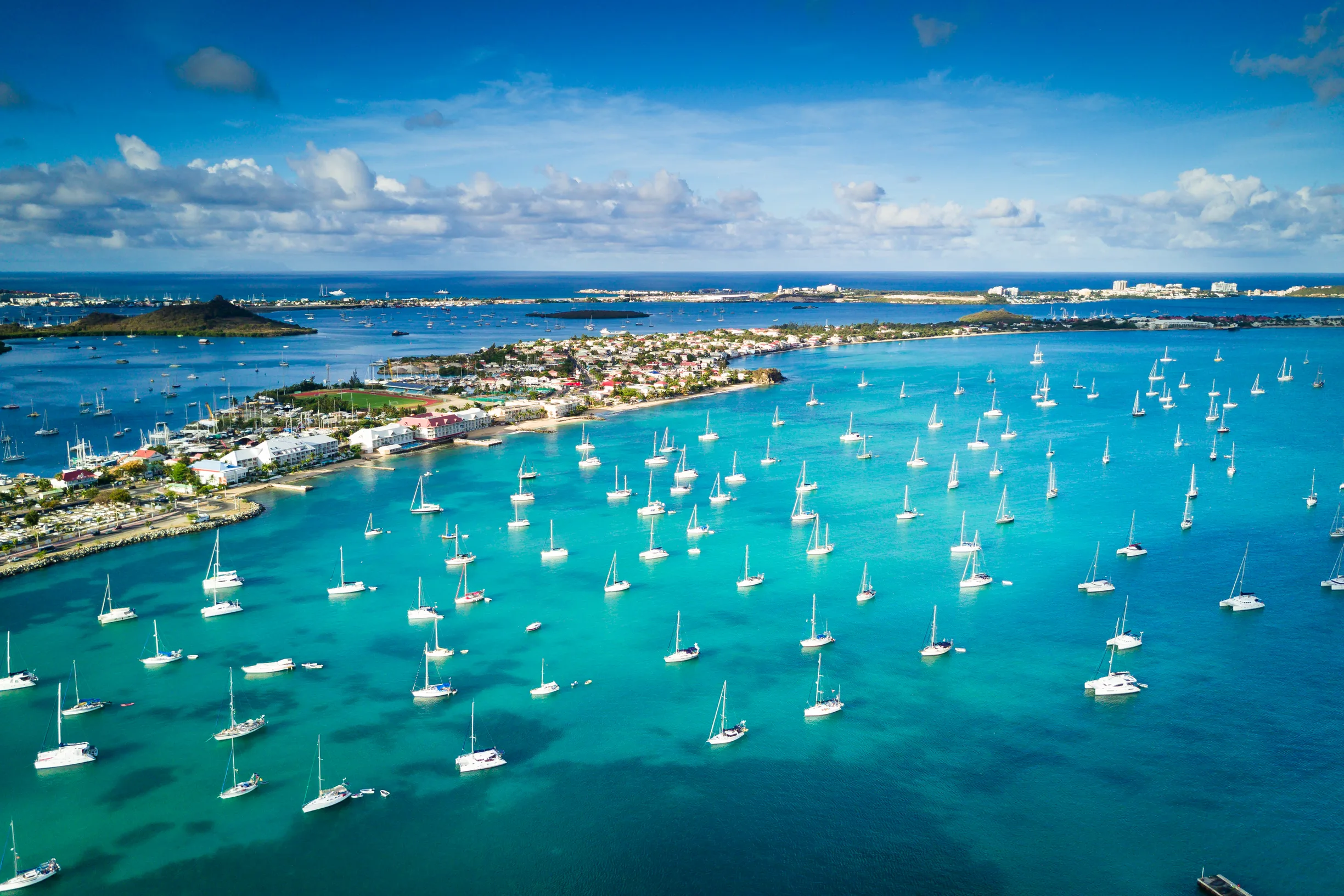
From a single base on Sint Maarten you can sail a three-flag loop in a week — Dutch and French St Martin, British Anguilla, and French St Barthélemy — without ever covering more than 20-odd nautical miles in a day. This St Martin St Barth catamaran itinerary threads the northern Caribbean’s most rewarding triangle: Grand Case for the lolos, Anguilla’s empty white beaches, and Gustavia before the New Year price spike.
It is a gourmet, short-hop week with one wrinkle to plan around — every island here is its own customs jurisdiction, so you clear in and out at each one. Get that rhythm right and the rest is easy sailing. This route builds on our St Martin catamaran charter base guide by turning the hub into an actual seven-day plan.
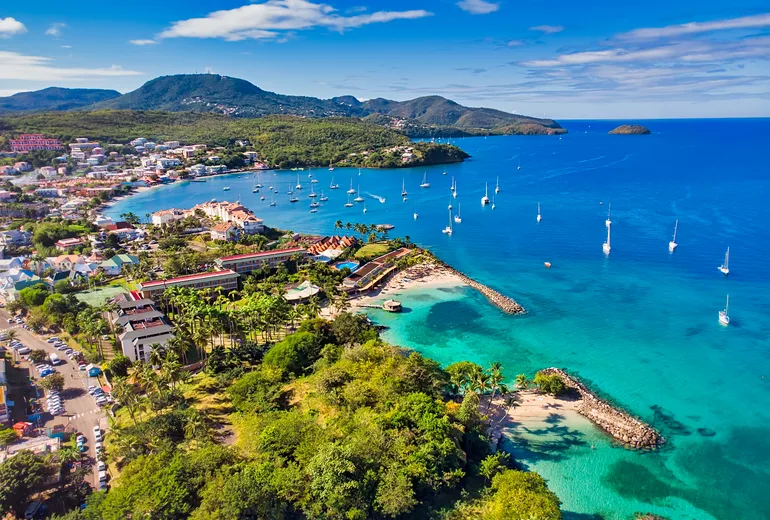
St Martin (Saint-Martin on the French side, Sint Maarten on the Dutch) is the practical hub of the northern Caribbean. The big charter fleets are based around the Simpson Bay Lagoon and Marigot, provisioning is excellent on both sides, and the island sits within an easy day’s sail of Anguilla to the north and St Barth to the southeast. You get European-grade food and supplies plus genuinely short passages — ideal for a week that is more about anchorages and dinner than long days at the helm.
One island, two countries, two systems: the Dutch south runs on the US dollar and a livelier nightlife scene around Philipsburg and Simpson Bay; the French north uses the euro and leans gourmet, with Marigot and Grand Case the draws. You will use both during the week.
Collect and provision the boat — do the bulk shop here, since prices on Anguilla and St Barth run higher. After the boat checks, make the short hop to Marigot on the French side and pick up a spot in Marigot Bay or the lagoon. Walk the waterfront market, where Creole spice vendors and fruit stalls set up most mornings, climb to the 18th-century Fort Louis for the view over the bay toward Anguilla, and have a first dinner ashore. An easy shakedown afternoon before the island-hopping starts.
Use the evening to confirm your clearance plan with the base. Charter companies on St Martin handle the customs logistics for their boats in different ways, and knowing in advance whether you clear electronically or in person at each island saves a scramble later. Note your dates: the loop reads very differently in the calm of November than in the crush of the Christmas-to-New-Year fortnight, when St Barth in particular fills with superyachts and prices spike.
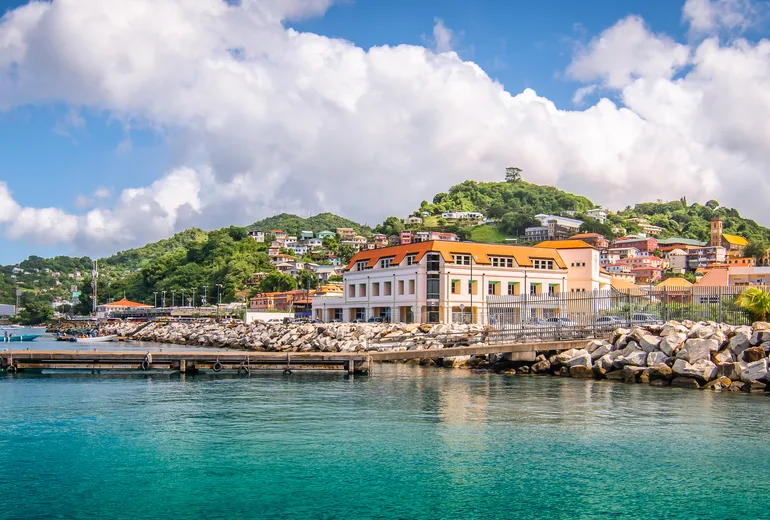
Sail a few miles up the French coast to Grand Case, the island’s culinary capital. The draw is twofold: a strip of serious French restaurants along the single main street, and the lolos — open-air barbecue grills along the beach where you eat ribs, chicken, johnny cakes and grilled snapper on plastic chairs for a fraction of restaurant prices. A plate at a lolo runs maybe US$15–20; a tasting menu at one of the white-tablecloth places can be ten times that. Anchor off the long beach, dinghy in, and make this your food highlight of the week. The anchorage is open to the west, so it is a fair-weather stop; check the forecast and move on if a westerly swell is running.
If you have a spare afternoon before dinner, the small uninhabited islet of Tintamarre off the northeast coast is a short hop and a fine snorkel-and-swim stop — a nature reserve with a long beach and clear water, popular with day boats but quiet by late afternoon. It makes a natural pairing with a Grand Case evening.
Before you leave French waters, handle your paperwork. You will clear out of St Martin and clear into Anguilla on arrival — Anguilla charges day-use and cruising fees per person and per boat, and marine park fees on top, so carry cash and budget for it. Rules and fees change, so confirm the current numbers with your charter base before you sail.
Anguilla lies about 12 nautical miles north of St Martin, an hour or two on a beam reach. The island is flat, dry and ringed by some of the finest white-sand beaches in the Caribbean. Clear in at Road Bay (Sandy Ground), then choose your anchorage. Prickly Pear Cays, a pair of uninhabited islets off the north coast, are the classic day stop — moorings inside a marine reserve, superb snorkelling, and a couple of beach restaurants. Sandy Island, a sliver of sand with a single bar, is the other postcard.
Anguilla is deliberately low-key and upscale; there is little nightlife and few towns, which is exactly the point. The beach bars punch above their weight, though — Shoal Bay East is regularly ranked among the Caribbean’s best stretches of sand, and the island’s barbecue spots and rum shacks at Sandy Ground are an easy dinghy ride from the anchorage. Spend the day swimming and snorkelling, then either overnight at a permitted anchorage or return to Road Bay. This is the quiet, scenic heart of the loop.
One planning note: Anguilla restricts overnight anchoring at some of its marine reserves, and the day-use and cruising permits are priced per person and per boat, so the island works best as a full day rather than a long stay. Treat it as the swimming-and-snorkelling centrepiece between the two food islands.
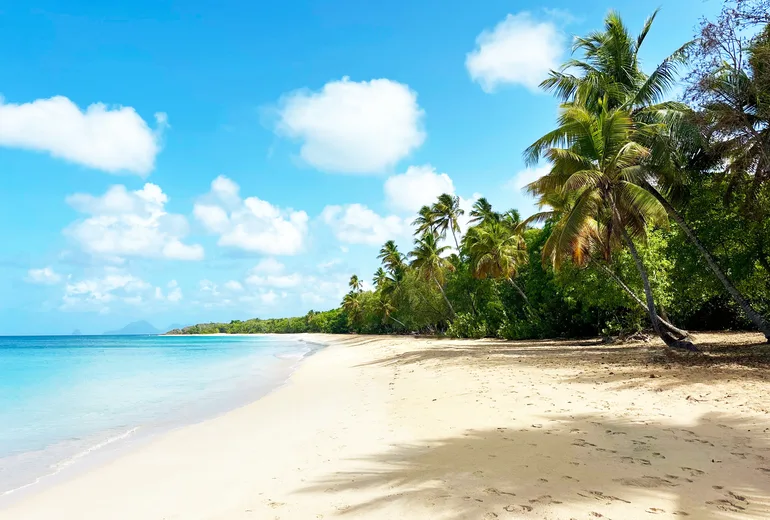
Clear out of Anguilla and sail back toward St Martin — a good day to reposition for the longer leg to St Barth and to restock if needed. Pick up the Dutch side this time: anchor off Simpson Bay or take a berth, watch the famous low-flying jets skim the beach at Maho if that amuses you, and enjoy the busier Dutch-side scene for an evening. The lagoon itself, shared by both nations, is one of the largest in the Caribbean and a hub for marine services if anything aboard needs attention before the windward leg.
This is also the practical night to top up provisions. The Dutch side runs on the US dollar and has well-stocked supermarkets around Simpson Bay and Cole Bay; prices on St Barth are noticeably higher, so buy your wine, beer and staples here rather than there. A good night’s sleep in a sheltered anchorage sets you up for the one genuinely lively sail of the week.
St Barthélemy sits about 15 nautical miles southeast of St Martin, often a windward leg, so pick a settled morning and expect a livelier sail than the rest of the week. Clear into St Barth at Gustavia, the island’s tidy little harbour town. Gustavia is the Caribbean’s most polished port — red-roofed buildings, designer boutiques, superyachts stern-to on the quay, and restaurant prices to match.
The timing point in this itinerary’s title is real: over Christmas and New Year, St Barth becomes one of the most expensive anchorages on the planet, moorings and berths are scarce, and Gustavia turns into a superyacht parking lot. Sail this loop in the shoulder weeks of winter 2026/27 — November or early December, or after mid-January — and you get the same island without the New-Year madness. For help reading the season, our guide to the best time to charter a catamaran in the Caribbean breaks down the price and weather windows.
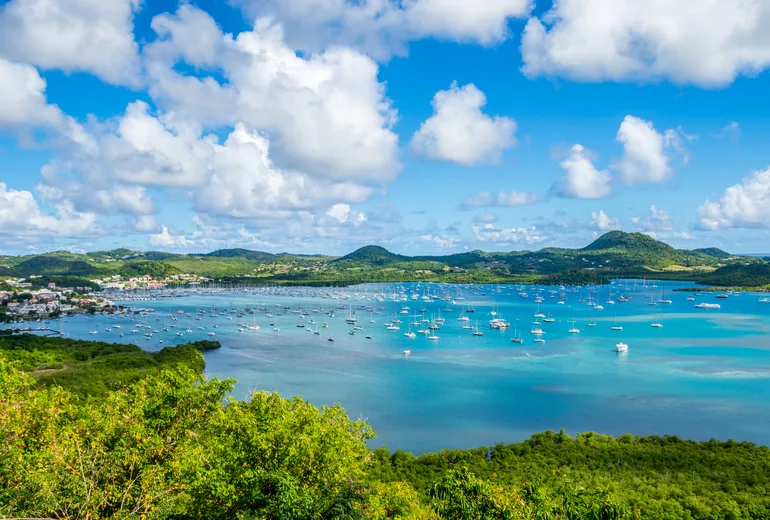
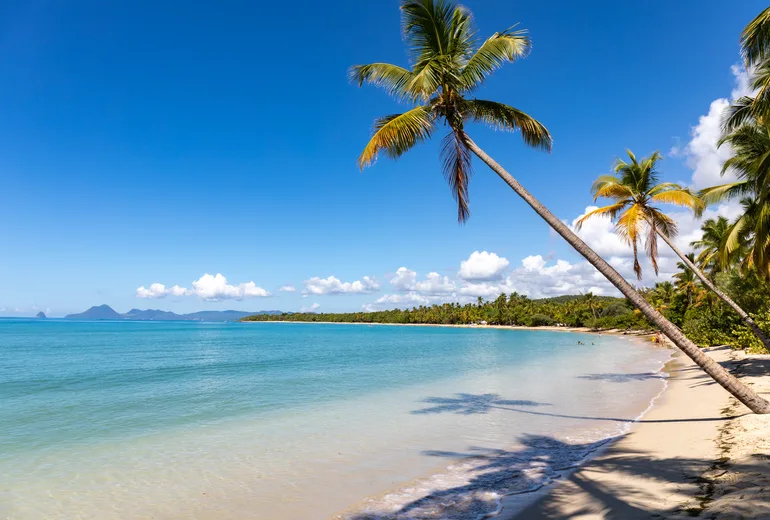
Beyond Gustavia, St Barth’s anchorages are the reward. Anse de Colombier on the northwest tip is a protected national-park bay reachable only by boat or a hiking trail — moorings, good snorkelling, and turtles in the shallows. Anse du Gouverneur and Saline on the south coast are stunning swimming beaches. Spend the day moving between a couple of them, then return to Gustavia for a final French-Caribbean dinner, or anchor out for a quiet last night.
St Barth is where the gourmet thread of the loop peaks. Gustavia’s restaurants are genuinely good and genuinely expensive; for something more relaxed, the beach clubs at Saline and the casual spots in the village of Lorient give you the island’s flavour without the harbour-front markup. A bottle of rosé and a long lunch at a beach restaurant is the classic St Barth move. If you want a sense of how a charter day flows from the first coffee to the sundowner, our piece on a day on a Caribbean charter catamaran captures the rhythm of stops like these.
Clear out of St Barth and make the roughly 15-nautical-mile run back to St Martin — usually a fast downwind sail. Clear back into St Martin, return to base, and plan to be in by your charter company’s drop-off time. As on every leg, do the customs paperwork promptly; the loop only works smoothly if you treat clearance as part of the day, not an afterthought.
The defining feature of this route is the paperwork. You cross three jurisdictions — Dutch St Maarten and French St Martin (same island, but the French and Dutch sides handle clearance differently for foreign-flagged boats), British Anguilla, and French St Barth — and each expects you to clear in and out. Keep the boat’s papers, crew passports and cash to hand, ask your charter base exactly how they handle clearances for their boats, and note that Anguilla in particular layers on per-person and marine-park fees. Provision the bulk of your food and drink in St Martin, where it is cheapest and best stocked, and treat Anguilla and St Barth as places to dine out rather than restock.
The classic loop runs St Martin to Anguilla and back, then southeast to St Barth and home — three nations in seven days with no long passages. Build in Grand Case for the lolos, Prickly Pear or Sandy Island off Anguilla, and Gustavia plus Anse de Colombier on St Barth.
About 15 nautical miles, usually a windward leg of two to three hours from St Martin to Gustavia. Pick a settled morning, as it is the liveliest sail of the week; the return is normally a fast downwind run.
Yes. Each is a separate jurisdiction, so you clear out and in at every island, and Anguilla adds per-person and marine-park fees. Carry the boat’s papers, passports and cash, and ask your charter base how they handle clearances for their boats.
Avoid the Christmas-to-New-Year window, when Gustavia fills with superyachts and prices and scarcity spike. The shoulder weeks of winter — November to mid-December, or after mid-January — give you the same islands far more comfortably.
Ready to plan your three-nation loop? See which catamarans are available out of St Martin on our Caribbean charter destinations page and we will help you time the route around the season.
Six short questions, then a real reply within four working hours.
Your privacy
You can read more about how we protect your personal data and use cookies in our Privacy Policy.
With your consent, we and Google use cookies and similar technologies to store and access information on your device and to process personal data such as your visit to this website, your IP address and cookie identifiers. You can withdraw your consent at any time through “Cookies” at the bottom of every page.
We and Google process data for:
Website analytics and visit statistics, recordings of visits to improve the website, ad measurement and remarketing, storing and accessing information on your device