Antigua & Barbuda 7-Night Catamaran Itinerary: English Harbour to Pink Sand
A week-long Antigua catamaran itinerary linking Nelson’s Dockyard, the island’s best bays and a two-night Barbuda detour to the pink-sand beach.
Read more
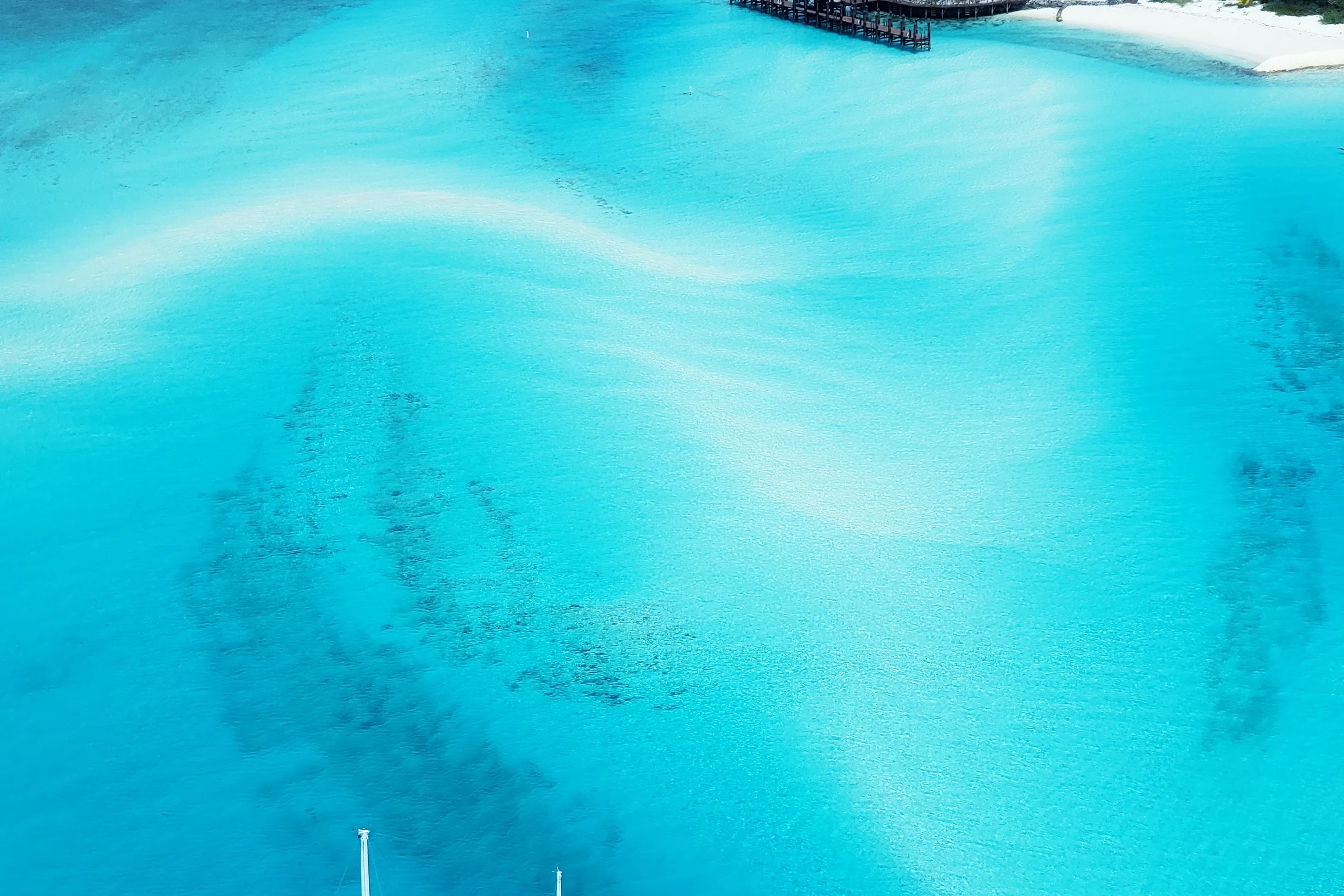
For decades Anegada sat behind an invisible fence. Most BVI charter contracts flatly banned bareboats from sailing there, and crews who asked at the briefing got a firm no. The island is a flat coral atoll ringed by Horseshoe Reef, the third-largest barrier reef in the Caribbean, and one wrong line through the entrance channel meant a grounding nobody wanted to explain.
That has changed. An Anegada catamaran charter is now squarely on the menu for most fleets, with marked channel buoys, a proper mooring field off Setting Point, and dive shops that will hand you a chartlet at the dock. This guide covers the approach, where to tie up, the lobster you came for, and why a shallow-draft cat is the right tool for these waters.
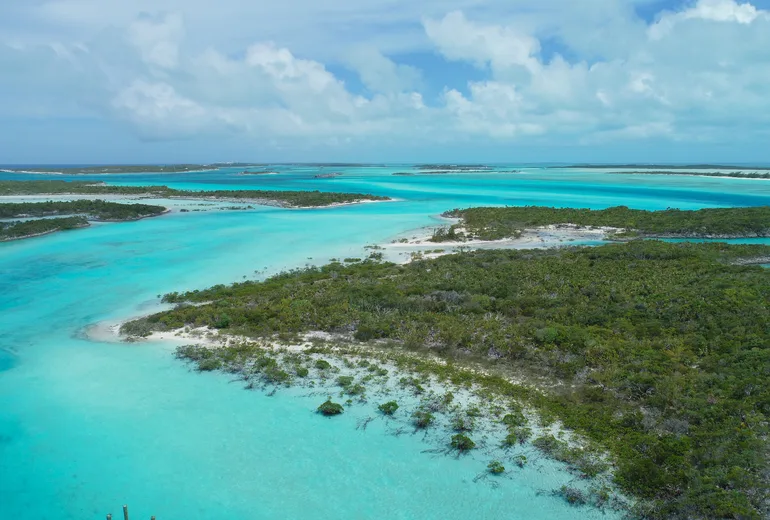
Every other BVI island is volcanic and high — you can see Virgin Gorda from 20 miles out. Anegada is the exception. Its highest point is about 8.5 metres, so the island barely lifts above the horizon until you are within a few miles, and the reef extends well offshore before you ever spot land. Insurers and charter companies read that combination as risk, and for years the answer was simply to leave it off the cruising area.
The unlock came from better navigation aids and a hard-won safety record. The entrance through the reef off Setting Point is now marked with red and green buoys, and the leading line is straightforward in good light. Most major operators will clear you for the trip after a short channel briefing, though a handful still require a paid skipper for the leg. Check the policy before you book if Anegada is the whole point of your week.
From Virgin Gorda’s North Sound it is roughly 13 nautical miles to the Anegada channel — call it two to three hours of beam reaching in the typical 15-20 knot easterly trades. From Trellis Bay on Tortola you are looking at closer to 15 NM. Either way, this is a daytime-only passage. The rule crews repeat to each other is simple: enter with the sun high and behind you, ideally between roughly 10am and 2pm, when the reef heads read dark against the turquoise.
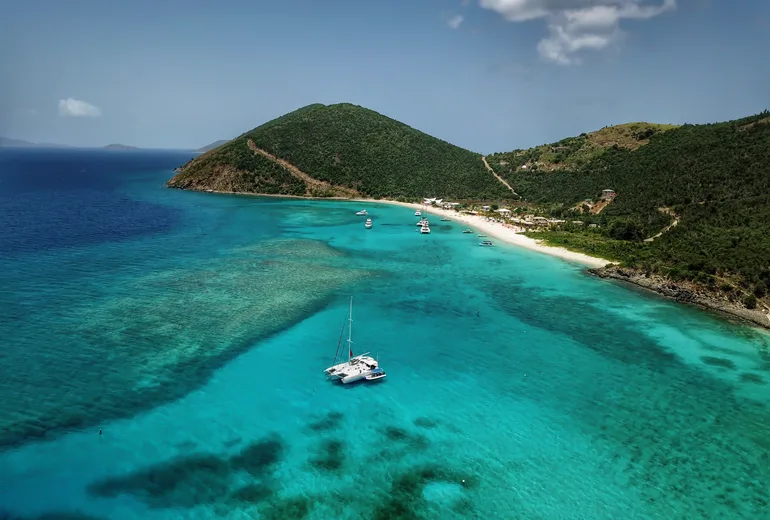
The marked channel runs in from the southwest toward Setting Point. Keep red to starboard on the way in, stay between the buoys, and resist the urge to cut corners. Once through, the holding is good sand in 2-4 metres, which is exactly where a catamaran earns its keep — most cats draw under 1.5 metres, so the thin water that intimidates a deep-keeled monohull is a non-event.
The mooring field off Setting Point has expanded over the years, and grabbing a ball is the low-stress option. Balls typically run around 35-45 USD a night, payable to whichever concession laid them — the staff at the Anegada Reef Hotel dock can point you to the right one. If the field is full, you can anchor just outside it in sand, but check your swing room against the shallow patches and dive on the anchor if you have any doubt.
One detail trips up newcomers: the holding is genuinely good, but the fetch across the open bay can build a short chop when the trades pipe up in the afternoon. A catamaran rides it far more kindly than a monohull, which is part of why so many of the boats you see on the balls here are cats. Set early, settle in, and you have a comfortable base for a night or two.
Anegada lobster is the reason half the boats are here. These are spiny Caribbean lobsters, split and grilled over an open flame of dried sea grape wood, usually served with rice, peas and a rum punch you should treat with respect. The Anegada Reef Hotel more or less invented the ritual, and its beachfront grill is still the classic. Call on the VHF (most spots monitor channel 16) by mid-afternoon to reserve, because they buy and prep to the count — turn up at 7pm without a booking and you may be eating chicken.
For something looser, the cab drivers who meet the dinghy dock will run you across the island to Cow Wreck Beach on the wild north shore. The bar there grills lobster too, the surf rolls in off the Atlantic, and the vibe is barefoot and unhurried. Loblolly Bay nearby has some of the best shore snorkelling in the BVI, with coral heads a short fin from the sand. Budget 25-40 USD round trip for the taxi; there is no public transport and the island is too big to walk.
Beyond the lobster, Anegada’s other local speciality is conch, served as fritters or in a fiery salad with lime and Scotch bonnet, and most kitchens here do it well. The island also has a saltwater flats fishery that draws bonefishing devotees from around the world — if anyone aboard fly-fishes, the inland salt ponds and the shallows off the south shore are a rare draw. Even non-anglers tend to enjoy walking the back roads past flamingos in the ponds and the wild donkeys that roam the scrub.
Horseshoe Reef is the headline attraction below the waterline. The shallow coral gardens off Loblolly and at the marked dive sites hold plenty of life, and visibility is typically excellent on a settled day. Bring your own gear, because rental options are limited, and snorkel from the dinghy at slack rather than fighting any tidal set across the reef flats. The same calm water that makes the island worth visiting can turn lumpy fast when the swell builds, so pick your morning.
Three things make a cat the natural choice here. The shallow draft lets you sit comfortably in the Setting Point field and nose into anchorages a monohull avoids. The wide, stable platform means the open-Atlantic chop on the approach barely registers, so seasick-prone crew arrive happy. And the big trampoline and cockpit turn the long lunch-hook stops into the part of the day everyone remembers.
There is a navigational bonus too. From a cat’s elevated helm and twin engines, station-keeping while someone reads the reef is far easier than fighting a single-screw monohull in a crosswind. If you are weighing boat types for a trip that includes thin water like this, our breakdown of bareboat versus crewed Caribbean catamaran charters covers when a skipper makes the Anegada leg worth it.
Anegada works best as a one- or two-night detour roughly mid-week, not a day trip. A common rhythm: sail the Sir Francis Drake Channel and The Baths early, overnight in North Sound to stage the jump, then run to Anegada on the third or fourth morning. That puts you on the reef with daylight to spare and leaves the back half of the week for Jost Van Dyke and the western islands.
Our full 7-day BVI catamaran itinerary through Tortola, Virgin Gorda and Anegada slots the island in at exactly that point, and the wider British Virgin Islands catamaran charter guide covers the anchorages on either side. If you are still choosing dates, the best time to charter a catamaran in the Caribbean matters here — winter trades are steadier, while a summer swell can close the channel for a day.
The Anegada run is at its best from December through May, when the trades are steady and the swell behaves. In high winter the channel is usually a non-issue with good light, and the island feels alive with the lobster crowd. Late summer brings two complications: more chance of a north swell wrapping into the approach, and hurricane-season weather windows that can shut the trip down for a day. If your week falls in the off-season, build flexibility into your plan and treat Anegada as a target, not a fixed appointment. Our overview of the best time to charter a catamaran in the Caribbean sets out how the seasons shift, and it matters more here than at any sheltered BVI anchorage.
Provisioning on Anegada is thin — this is a 300-person island, not a supply stop. Stock up properly in Road Town or Spanish Town first; our BVI provisioning and Tortola cost guide lays out where and what. Bring cash, because card machines are unreliable and the lobster grills prefer USD notes. Fuel is available but limited, so top up before you leave Virgin Gorda. And watch the forecast: with the reef open to the north and east, a building swell is your cue to leave a day early rather than risk a marginal channel.
A last word on mindset. Anegada rewards patience over a tight schedule — the island runs on island time, the taxi may be late, and the lobster takes as long as it takes. Crews who arrive expecting a slick resort leave grumbling; crews who lean into the slow rhythm leave planning their return. It is the rare BVI stop that still feels like an expedition, and on a stable, shallow-draft catamaran it is well within reach of an ordinary charter week.
Most major BVI operators now allow it after a channel briefing, which is a big change from the old blanket ban. A few companies still require a paid local skipper for the Anegada leg, so confirm the exact policy with your charter company before booking if the island is a must-do.
The marked channel carries roughly 2-3 metres at its controlling depth, which is comfortable for a catamaran drawing under 1.5 metres. The key is light, not depth — enter between mid-morning and early afternoon with the sun high so you can read the reef heads visually.
A grilled spiny-lobster dinner at one of the beach grills typically runs around 50-65 USD per person depending on size and sides. Reserve by VHF or phone in the afternoon, because the bars buy to the day’s bookings and walk-ins often miss out.
From North Sound on Virgin Gorda it is about 13 NM, or two to three hours in the trades. From Trellis Bay on Tortola allow closer to 15 NM. Treat it strictly as a daytime passage and plan your departure so you reach the channel with the sun well up.
Ready to put the once-forbidden island on your route? Browse our Caribbean catamaran charter destinations and start a BVI week that ends with lobster on the sand at Setting Point.
Six short questions, then a real reply within four working hours.