Best Catamarans for Caribbean Charter 2027: 8 Fleet Models Compared
Eight Caribbean charter catamarans compared by group size, budget, AC, squall handling and availability for the 2027 season.
Read more

Chartering a whole crewed catamaran in the Caribbean can run €20,000 or more for a week once you add the boat, the crew and provisioning. For two people, that math rarely works. A catamaran cabin charter Caribbean booking solves it: you pay for one cabin on a shared boat, much like a small-group sailing cruise, and split the boat, crew and meals with three or four other couples.
It is not for everyone — you trade privacy and route control for a price that can be a quarter of the whole-boat figure. This guide covers how per-cabin pricing really compares, which operators run cabin cruises in the BVI and Grenadines, and an honest picture of what shared-boat life is actually like.
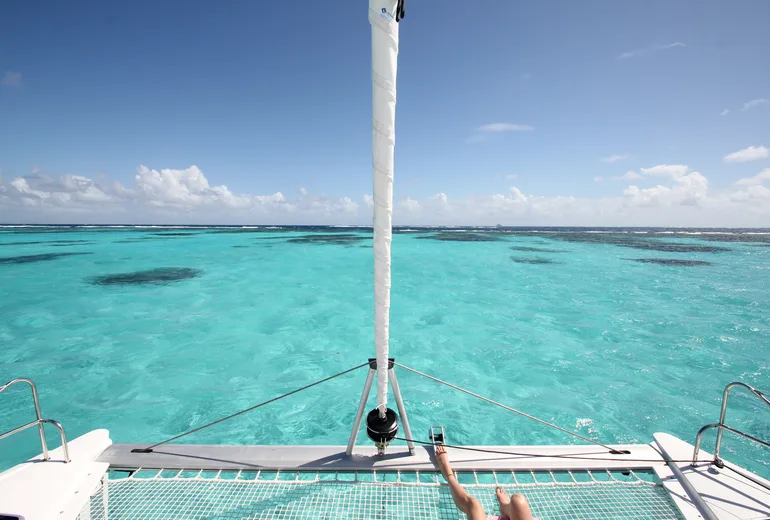
On a by-the-cabin cruise, a charter company puts a crewed catamaran on a fixed weekly route and sells each guest cabin separately. A typical 45-to-50-foot cat carries three or four guest cabins, so you might share with six to eight strangers plus a captain and, on the bigger boats, a cook. The captain sets the itinerary, handles the sailing, and you join in as much or as little as you like.
Think of it as the sailing equivalent of a small-ship cruise rather than a private yacht. You wake up in a different bay most mornings, meals are usually included, and the social side is part of the appeal. If you have ever wondered what a day aboard looks like, our piece on a typical day on a Caribbean charter catamaran from sunrise to sundowner gives a good feel for the rhythm — a cabin charter follows the same arc, just with more faces at the dinner table.
This is where a cabin charter earns its keep. Here is the rough shape of the numbers for a week.
For two people, the difference is stark. Fill a whole boat with eight friends and the per-person cost converges, sometimes beating a cabin cruise — so cabin charters win specifically when you are a couple or solo and do not have six friends ready to commit. For a fuller breakdown of what crewed pricing includes at each level, see our guide to all-inclusive crewed catamaran price tiers in the Caribbean.
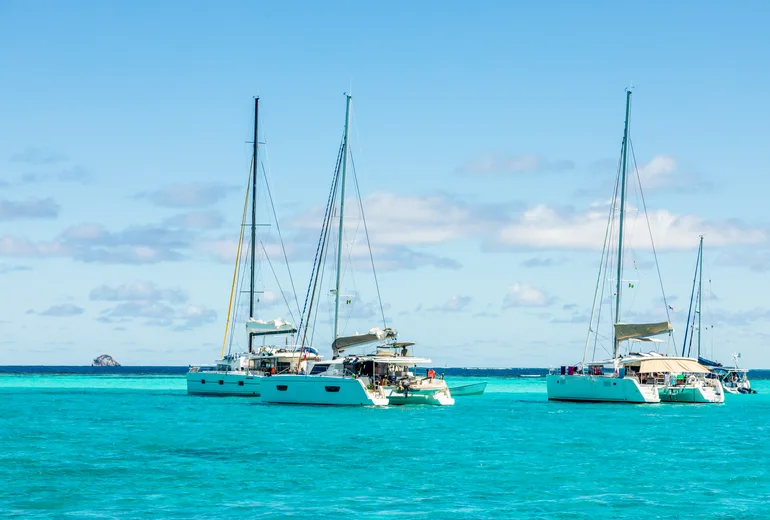
Most cabin cruises bundle your cabin, breakfast and lunch aboard, the captain and crew, and the sailing itself. Dinners are sometimes ashore at your own cost, sometimes included. Almost never included: bar tabs, mooring fees at private spots, national park fees in the Grenadines, watersports gear beyond snorkels, and crew gratuities (budget 10–15% of the cabin fare). Read the inclusions line by line before you book, because two cruises at the same headline price can differ by hundreds of euros once the extras land.
Two regions dominate the Caribbean cabin-charter scene, and they offer quite different weeks.
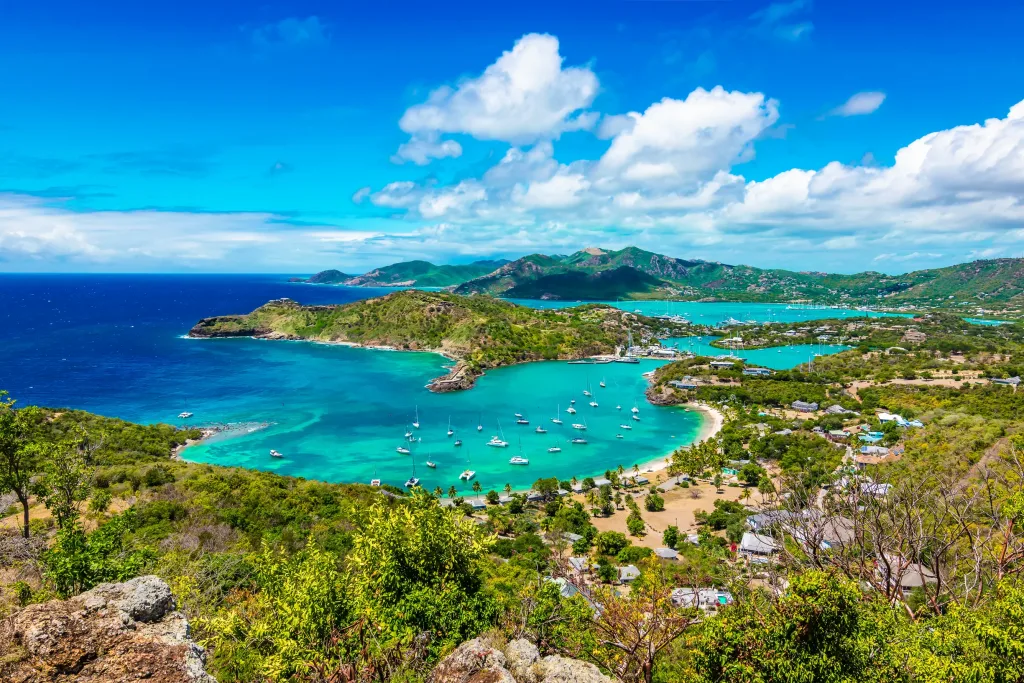
The BVI is the easiest cabin cruise to enjoy: short hops between protected anchorages, calm waters, and famous beach bars within dinghy range. A typical week threads Norman Island’s caves, the Baths at Virgin Gorda, Cane Garden Bay on Tortola and White Bay on Jost Van Dyke. Legs are short — often under 12 nautical miles — so even guests with no sea legs settle in fast. It is the gentler, more sociable option.
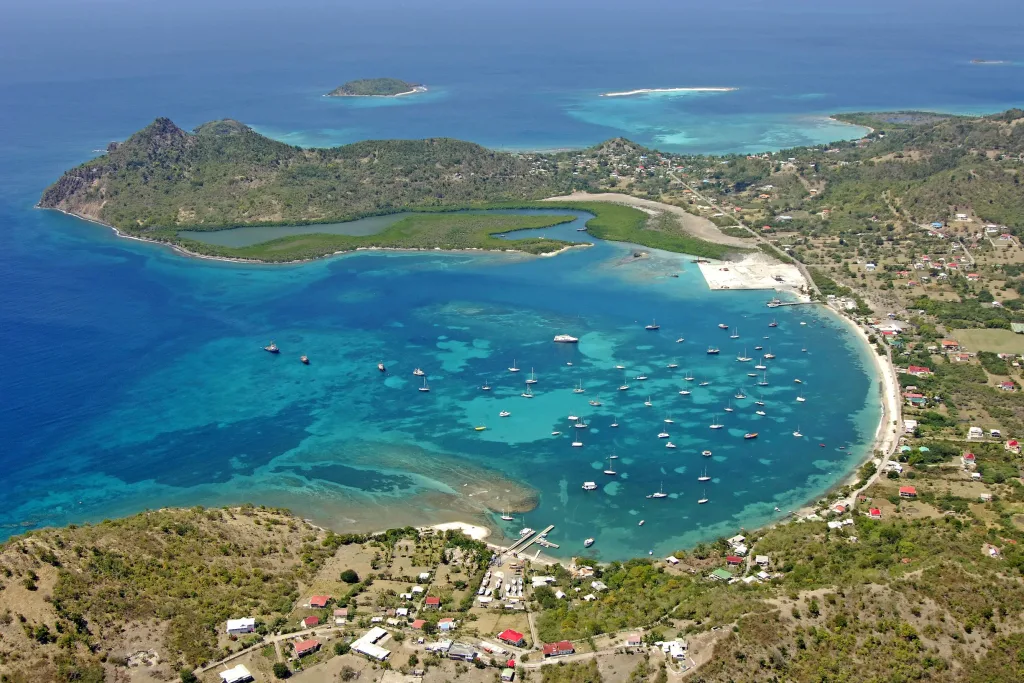
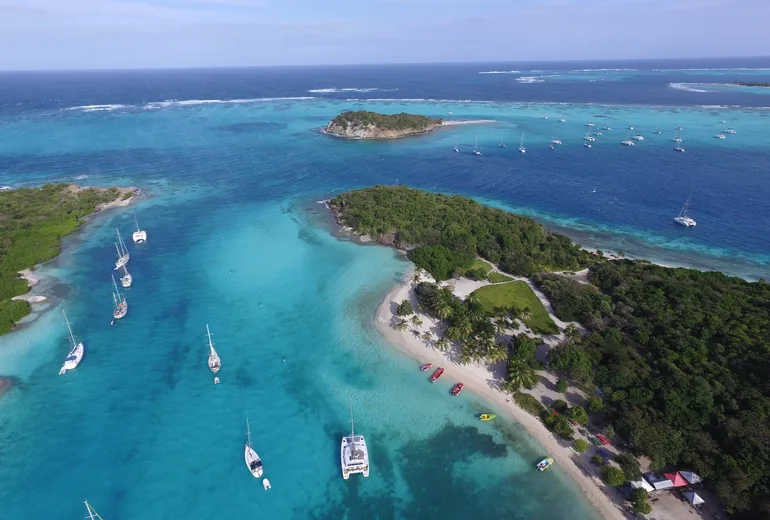
South of the hurricane belt, the Grenadines deliver a wilder, more remote feel: Tobago Cays inside the horseshoe reef, Salt Whistle Bay on Mayreau, Admiralty Bay at Bequia, and the exclusive anchorage off Mustique. Passages are longer and breezier, and there are fewer beach bars, so this suits guests who want sailing and snorkelling over nightlife. Fleet availability is tighter here than in the BVI, which is worth knowing if your dates are fixed.
The brochures show sunset toasts with new friends. That happens — but so does sharing one or two heads with seven other people, hearing your neighbour’s alarm through a bulkhead, and adapting to a route the captain chooses, not you. Most weeks the social chemistry is good and strangers become a temporary crew. Occasionally it is awkward. Going in clear-eyed makes all the difference.
This format works best for couples and solo travellers who are sociable, flexible about the itinerary, and want the catamaran experience without the whole-boat budget. It also suits first-timers who would rather have a professional captain make every call than skipper a bareboat themselves. If you are deciding between crewing yourself and being looked after, our comparison of bareboat versus crewed Caribbean catamaran charters lays out the trade-offs.
If you are travelling with kids, value privacy highly, want to dictate the route, or already have six-plus people, a private boat usually makes more sense — and the per-person cost often lands close to a cabin fare once the group is large. Honeymooners in particular tend to regret sharing.
Mornings tend to start slowly: coffee in the cockpit, a swim off the back, then a short sail to the next anchorage while breakfast is cleared. Lunch is usually aboard at anchor, the afternoon is for snorkelling or a beach, and dinner alternates between the crew cooking and a run ashore — Foxy’s on Jost Van Dyke or a beach grill in the Grenadines. The captain reads the weather and the group’s mood and adjusts; some days you sail a fair distance, others you barely move. The rhythm suits people who want to be looked after rather than make every decision.
A few practical moves separate a smooth booking from a disappointing one. Ask how many guest cabins the boat carries and how many heads — a four-cabin boat sharing two heads is tighter than it sounds. Confirm whether all meals are included and what the drinks policy is. Check the cabin layout: a forward cabin in the bow is bouncier underway than an aft one. And book early for the December-to-April high season, when the better-rated boats and crews fill months ahead.
It also pays to ask who else is on the boat. A good operator will tell you the rough make-up of the other guests — couples, a group of friends, mixed ages — so you can judge the social fit before you commit. If the chemistry of a small group matters to you, a smaller three-cabin catamaran with six guests feels very different from a busy four-cabin boat with eight. A catamaran cabin charter Caribbean booking lives or dies on those details as much as on the route.
Because cabin inventory is limited and fills unpredictably, it pays to ask early rather than browse late. You can see which crewed catamarans are running in your window on our Caribbean charter destinations page, and our team can point you to the cabin-charter departures that fit your dates and budget.
Yes. A number of operators in the BVI and Grenadines sell crewed catamaran cruises by the cabin, so a couple or solo traveller can join a shared boat rather than charter the whole vessel. You get a private cabin and share the saloon, crew and itinerary with the other guests aboard.
Expect roughly €2,500–4,500 per person for a week, usually including your cabin, meals aboard and the crew. Drinks, national park and mooring fees, fuel surcharges and crew tips are typically extra, so budget another 15–20% on top of the headline fare.
For a couple or a solo sailor, almost always — a whole crewed catamaran can cost €18,000 or more before extras. The math flips once you have six to eight people, because splitting a private boat then lands near the per-cabin price while giving you full control of the route.
Sociable and mostly relaxed, but you trade privacy and route choice for the lower price. You share heads with the other guests, the captain sets the itinerary, and the dinner table is communal. Most crews bond quickly; if you value solitude, a private boat suits you better.
Curious which crewed catamarans are running cabin cruises in your dates? Explore the options on our Caribbean catamaran charter destinations page and we will help you find the right shared boat.
Six short questions, then a real reply within four working hours.