10-Day BVI Catamaran Itinerary: The Unhurried Loop Beyond the 7-Day Classics
A relaxed 10-day BVI catamaran route adding two nights at Anegada, the Norman Island caves and slow Jost Van Dyke days to the classic loop.
Read more
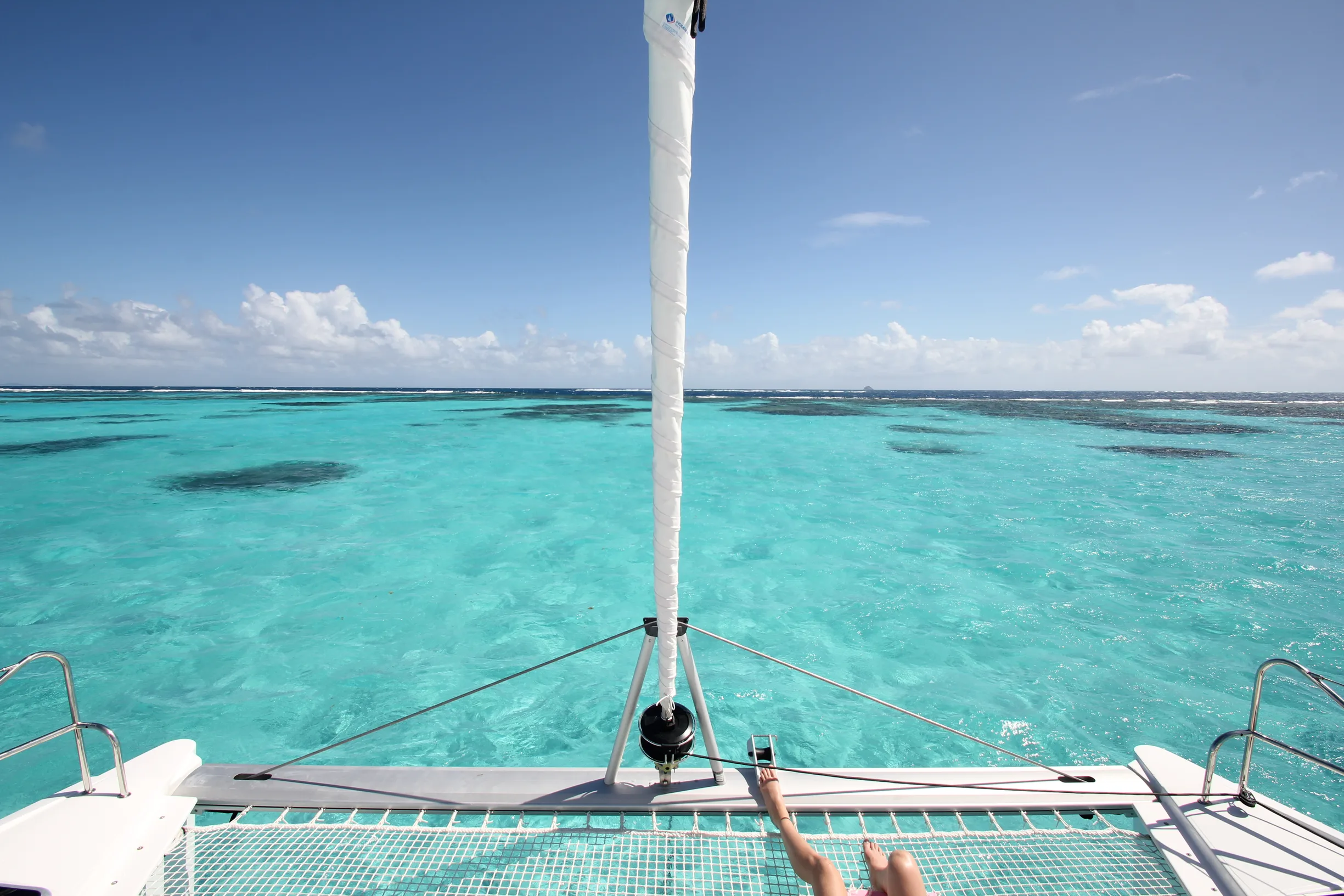
On paper a bareboat looks like the obvious money-saver. A crewed catamaran might be quoted at 25,000 USD all-in for the week while the same boat bareboat sits at 10,000 — a 60% saving that makes the decision look made for you. It isn’t, and the reason is everything the bareboat number leaves out.
This is the bareboat charter real cost vs crewed rebuild: take that tempting base rate and add back the captain, the food, the fuel, the moorings and the rest until you are comparing like with like. By the time the boat is actually sailing and fed, the gap usually closes to 30-40%. That is still a real saving — but it is a different decision than 60% suggested.
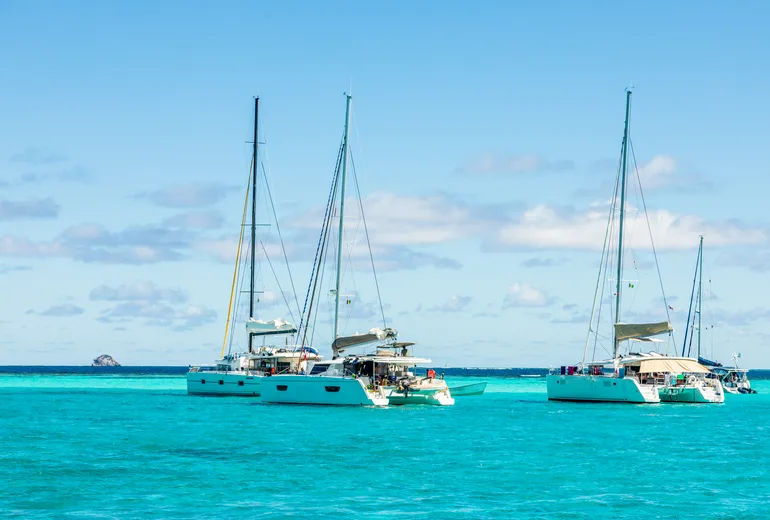
The crewed price is all-inclusive by design: captain, often a chef or hostess, all meals, fuel, water, moorings, taxes and usually the bar. The bareboat price is the boat and almost nothing else. Comparing the two raw numbers is like comparing a hotel package to an empty apartment — technically the same roof, completely different bill.
To make an honest call you rebuild the bareboat quote with every line the crewed price already contains. Do that and the 60% illusion deflates fast.
If you do not hold the required qualifications and resume, you need a skipper — and even many qualified crews hire one for unfamiliar waters. A professional captain runs roughly 200-250 USD a day plus food and a tip, so call it 1,500-1,900 USD across a week. That single line erases a large slice of the apparent saving before you have eaten a thing.
It is worth being honest about who can genuinely skip this line. Charter companies want to see a real sailing resume — bareboat experience on a similar-size boat, ideally in comparable waters — not just a weekend course certificate. If your group’s most experienced sailor is being optimistic about their qualifications, the safe and often required move is to add a skipper, which means the true bareboat-versus-crewed gap for you is narrower than the brochure implies from the start.
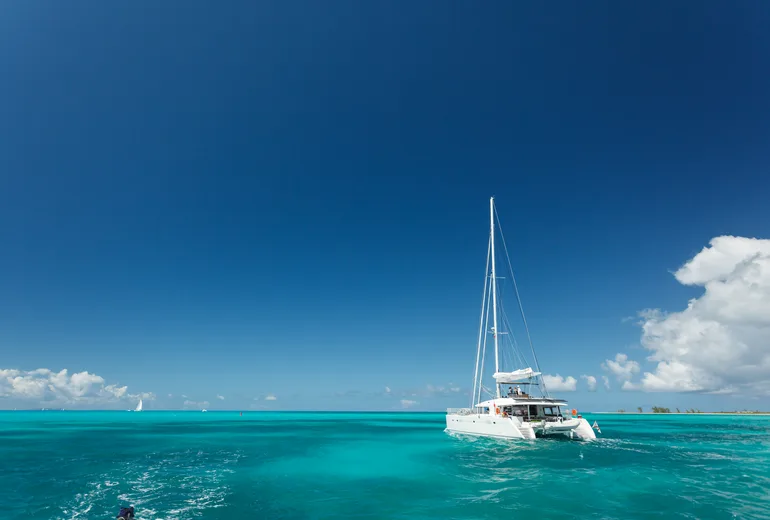
On a crewed boat, food and a chef are included. Bareboat, you provision yourself — and a week’s groceries for six in the Caribbean is not cheap, because most of it is imported. Plan on 900-1,500 USD for full provisioning, more if you eat well, and remember someone has to shop, cook and clean. Our BVI provisioning and cost guide shows where that money actually goes.
The crewed rate absorbs these; bareboat does not. Across a week, budget 100-200 USD of fuel and water and 250-380 USD of mooring balls in a ground like the BVI. None is huge alone, but together they are another 350-580 USD back onto the bareboat side of the ledger.
The destination tilts these numbers. The BVI runs almost entirely on paid mooring balls, so the nightly fees stack up; the Grenadines lets you anchor for free more often but charges more for thinner provisioning. The Bahamas adds a 14% charter tax on the boat itself that quietly inflates the bareboat base before any extras. Whichever ground you pick, the lesson holds: the surrounding costs are real and they move the bareboat total well above its sticker.
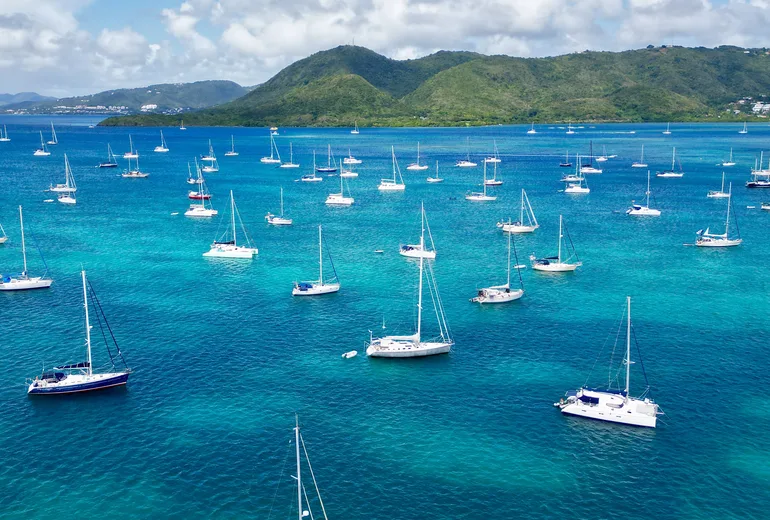
Cruising permits, National Parks fees and customs apply to both, but on a crewed charter they are usually folded into the quote, while on a bareboat you pay them visibly on top. The big one is the damage waiver: a bareboat carries a substantial security deposit, and buying it down to a non-refundable waiver costs 300-500 USD for the week. A crewed charter’s professional captain absorbs that risk for you.
Take a real example. Crewed: 25,000 USD all-in, full stop. Bareboat: 10,000 base, plus a skipper at ~1,700, provisioning at ~1,200, fuel and water ~150, moorings ~320, permits and customs ~400, damage waiver ~400. That bareboat week now lands around 14,200 USD before tips and the bar — roughly a 43% saving, not 60%.
Skip the hired skipper because you are qualified and the gap widens again, toward the headline figure. Add a chef-hostess to the bareboat to ease the workload and it narrows further. The point is that the honest comparison sits in the 30-40% band for most crews, not the 60% the raw rates imply.
Crew size changes the arithmetic in your favour. Spread that 14,200 USD bareboat week across eight people and it is roughly 1,775 USD a head; the 25,000 USD crewed week is about 3,125 a head. The per-person gap is real and meaningful, but it buys a working holiday rather than a served one. A smaller crew of four flips the logic — the fixed costs of the skipper and the boat weigh more heavily per person, and many couples-plus-friends groups find the crewed premium surprisingly easy to justify once they price their own labour into the bareboat side.

The money you keep on a bareboat is real, but it comes with labour. Someone navigates, someone cooks three meals a day, someone scrubs the galley and someone gets up at 2am if the anchor drags. On a crewed boat that is all handled, and the week is a genuine holiday rather than a shared job. Our deeper bareboat versus crewed catamaran decision guide weighs that lifestyle difference, and the all-inclusive crewed catamaran price tiers piece shows exactly what the crewed number covers.
For the full base-rate context across boat sizes and seasons, our Caribbean catamaran charter cost breakdown is the companion to this math. Read the two together and the real choice becomes clear: pay more for a hands-off week, or save 30-40% and run the boat yourself.
Go bareboat if you hold the qualifications, enjoy running the boat and want to keep the saving — knowing you are also signing up for the work. Go crewed if you want to step aboard, hand over the lines and do nothing but enjoy the islands, and if splitting the higher cost across a full crew brings the per-person number within reach. And whatever you do, build the bareboat number out fully before you commit, so you are comparing the real total, not the marketing one.
There is a middle path many crews overlook. Booking a bareboat and hiring just a captain — no chef, no hostess — keeps the cost well below a full crewed package while removing the navigation stress and the risk of an unfamiliar ground. You still cook and provision, but you sail in confidence and learn the waters from a pro. For first-timers in places like the Bahamas banks or the Grenadines’ open passages, that captain-only option is often the smartest spend on the whole sheet, and it changes the bareboat-versus-crewed question from either-or into a sliding scale you control.
The raw rates can suggest 60%, but once you add a skipper, provisioning, fuel, moorings and the damage waiver, the honest gap is usually 30-40%. If you are qualified to sail without a hired captain, the saving widens back toward the headline figure.
Only if you do not hold the required sailing qualifications and resume, but many qualified crews hire one anyway for unfamiliar waters. A professional captain costs roughly 200-250 USD a day plus food and a tip, which is the single biggest line that closes the bareboat-versus-crewed gap.
Typically the captain, often a chef or hostess, all meals, fuel, water, moorings, taxes and frequently the bar — an all-inclusive package. The main extras are crew tips, usually 15-20% of the base, and any premium drinks or special requests beyond the standard provisioning.
It can be, because most groceries are imported. Full provisioning for a crew of six runs roughly 900-1,500 USD a week, plus the time to shop and the daily work of cooking and cleaning. That cost and labour are exactly what a crewed charter’s price removes.
Want to run the real numbers for your group? Start with our complete Caribbean catamaran charter cost breakdown and decide whether the 30-40% saving is worth running the boat yourself.
Six short questions, then a real reply within four working hours.